With More Spells - Warlock: Dungeons & Dragons Treats the Rulebook as a Suggestion
Invoke Studios' upcoming action-adventure game takes D&D's world, monsters, and magic and transforms them into an open-world action toolkit, freely mixing classic spells, ideas from old editions, and brand new magic.
A toolkit that mixes classic spells, ideas from old editions, and new magic
After Baldur's Gate 3, nearly every new game that gets the Dungeons & Dragons name on the box will have to contend with extremely high and somewhat unfair expectations. The good news is that Warlock: Dungeons & Dragons is choosing to go in a completely different direction. At the ONL event a few days ago, we got our first look at Warlock's gameplay, a third-person action-adventure game from Invoke Studios and Wizards of the Coast, planned to arrive sometime in 2027. Instead of trying to recreate the tabletop RPG, Warlock takes the world, monsters, and especially the magic of D&D and turns them into an action game toolkit in an open world.
At the center of the game is Kaatri, an experienced warrior who makes a pact with Tasha to gain access to powers that might have been better left locked away. Anyone familiar with D&D probably also knows Tasha, one of the most famous witches in the universe, and here she serves as the Patron from whom Kaatri receives her Warlock powers. And that's where things start getting interesting for those who know the rulebook. We of course see Eldritch Blast because apparently it's legally forbidden to create a Warlock without it. We also see magical weapons that can be summoned and a Familiar that looks like an Imp. But from here, Invoke starts going wild. Kaatri uses Tasha's Leash, which is a new spell that allows her to pull enemies and objects, hold them, and throw them. She activates Levitate in a way that feels almost like Telekinesis, passes through bars with Misty Step, and summons Black Tentacles that can grab monsters or serve as part of the environment.
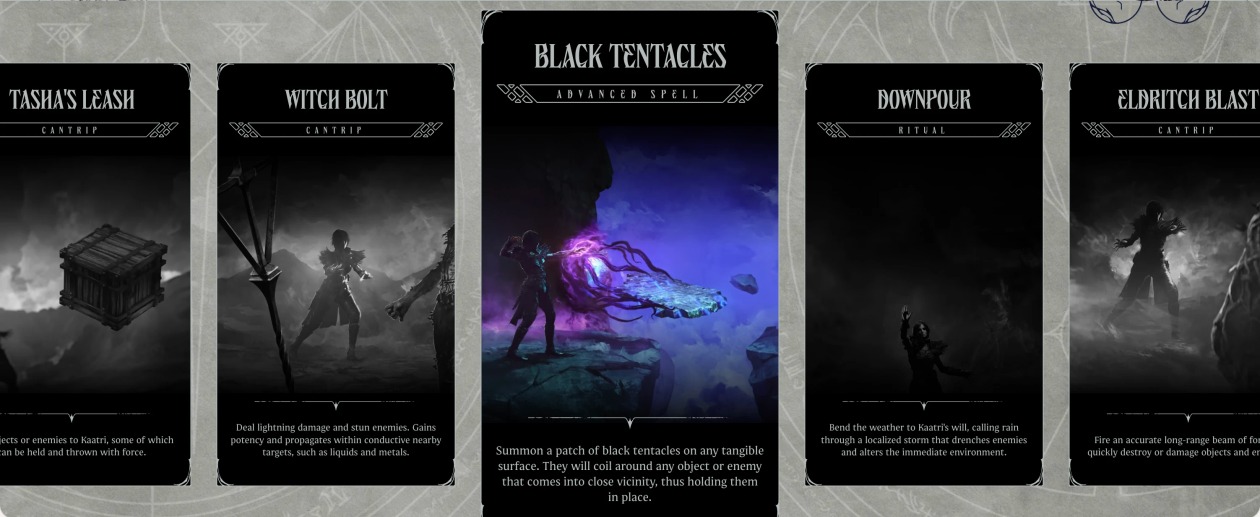
Even familiar definitions start to bend. Misty Step and Witch Bolt, spells that require resources in the tabletop game, are defined here as Cantrips and become part of Kaatri's permanent toolkit. But it definitely doesn't end there. Fey Switch, which allows her to swap places with an enemy, is pulled from past D&D ideas, and alongside all these, Invoke is also inventing new spells specifically for the game. For anyone who knows Warlock from the tabletop, Kaatri is starting to look a bit like a character who showed up to a session with a Character Sheet and the DM told her: forget it, just take whatever looks cool to you. And that might actually work.
Invoke says explicitly that they're not trying to recreate D&D one-to-one. The idea is to use more than fifty years of spells, monsters, and rules as a foundation for a game where spells solve problems. Gust of Wind can push enemies and objects, disperse gas, or ignite fire. Downpour summons rain that changes the environment, and Witch Bolt can use water and metal to conduct electricity between targets. The chosen setting fits this approach very well. Warlock takes place in Darkon, one of the Domains of Dread from Ravenloft, a darker corner of D&D with Gothic cities, wilderness areas, and lots of Undead. The developers describe it as an open world based on exploration, where magic is meant to allow you to reach places and solve situations in different ways.
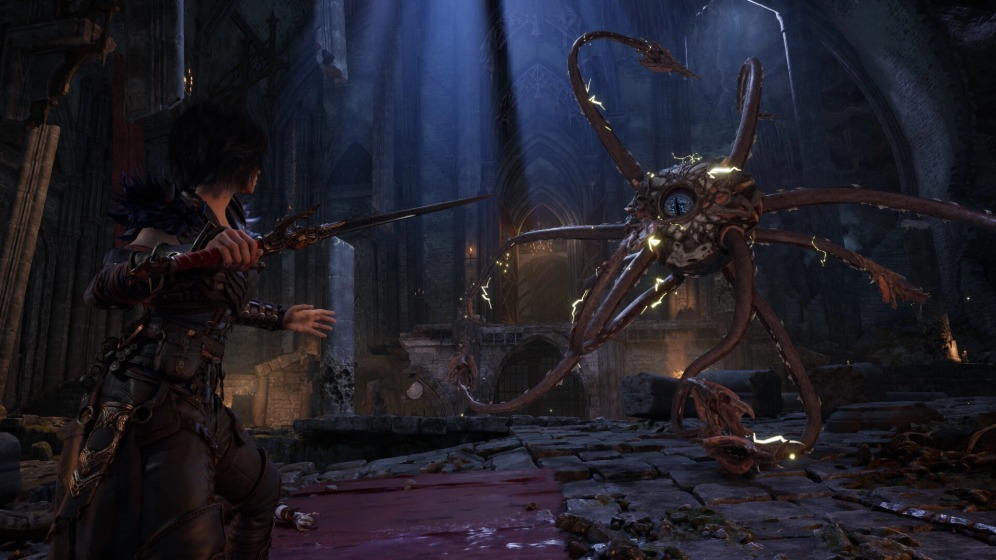
And that's probably what makes Warlock one of the more intriguing D&D games currently in development. Baldur's Gate 3 showed how well you can translate the tabletop RPG to PC. Invoke is testing what happens when instead of translating the rulebook, you simply open it, choose the coolest toys, and let the player go wild with them.