Review: ZERO PARADES: For Dead Spies - The Sixth Sense
Inconsistent text and voice acting detract from this otherwise excellent RPG experience from ZA/UM, the studio behind Disco Elysium.
A review copy was provided to us by ZA/UM, thank you very much!
The story of Disco Elysium is undoubtedly fascinating. It came out in 2019, developed by a new and relatively unknown studio called ZAUM, which produced what became one of the best games of 2019 and won quite a few different awards. Others even defined it as one of the best role-playing games of all time, which led the studio to start working on several new games, including a sequel to Disco Elysium. Fast forward to October 2022, and we got the news that some of the studio's founding team had left—not of their own accord. Some of the reasons included corporate power struggles, fraud, and other personal conflicts between various key figures at the studio. Along with this, many of the games the studio was working on were canceled, except for one game that goes by the name C4.
In March of last year we got signs of life from Project C4, but only last September did we actually see it in action for the first time, during Sony's State of Play, where we learned the game's name: Zero Parades: For Dead Spies. The game was given a fairly broad release window of 2026, and while we saw that it retained the art style of the previous game, the gameplay looked very similar, but the world itself was completely different. The developer doesn't consider it a sequel or spiritual successor, but rather a new game with different inspirations from those of the previous game. But we're playing something that comes from a ZA/UM that's completely different from the one in 2019, with different writers and new developers. After many questions about continuity, does this game exceed expectations?
Not James Bond
Unlike the previous game, where we played a cop with pretty nasty amnesia, this time we're playing a secret agent, Hershel, code name Cascade. She arrives at a hotel in Portofiro to meet her mission partner, PSEUDOPOD, and get details about their joint mission. But to her surprise, she finds him unconscious—a body still breathing and moving, but not waking up or responding to anything in the outside world. When Hershel reports this to her handler, she's told she's failed the mission, that someone managed to reach her partner before her, and that she needs to return to the office where she'd been stuck for so many years. Hershel, refusing to give up on the mission she was supposed to carry out and wanting to prove herself, begins investigating the hotel area—who hurt her partner, and what was her mission supposed to be in the first place?
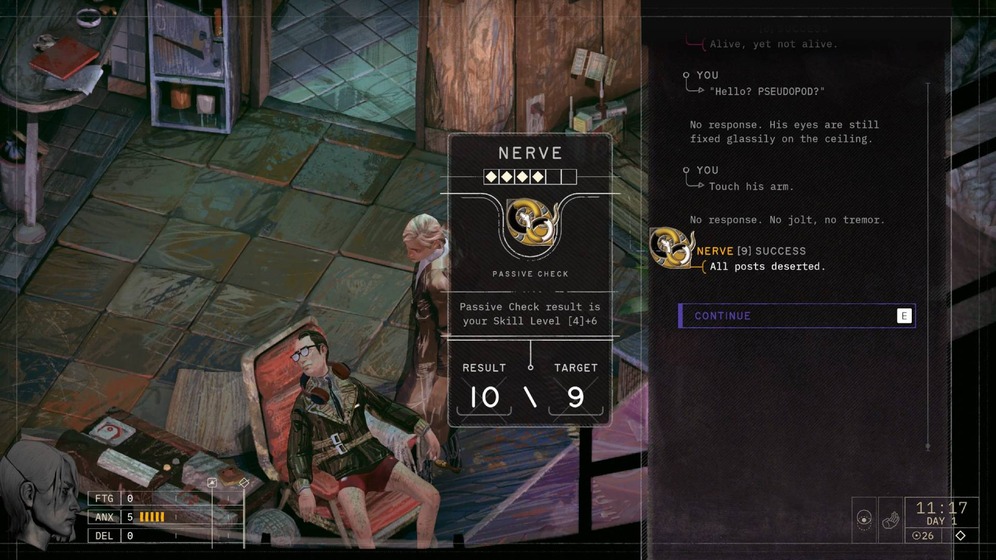
The game very quickly throws us into its world. We're free to start investigating our partner's room, and immediately after that, the city of Portofiro itself, where Pseudopod stayed in the days leading up to the events that currently hold us in complete uncertainty. The world itself is particularly colorful and full of people we can communicate with and question, much of it surrounding our mysterious partner and trying to understand who caused his condition. There are many ways in which the role-playing in this game is perhaps one of the most creative things I've seen in a while, with the player's freedom to reach their goals being very open. For example, if I want a certain item that belongs to another person, I can try to convince them to bring it to me, or alternatively decide to wait until late at night and simply break into the place to steal it.
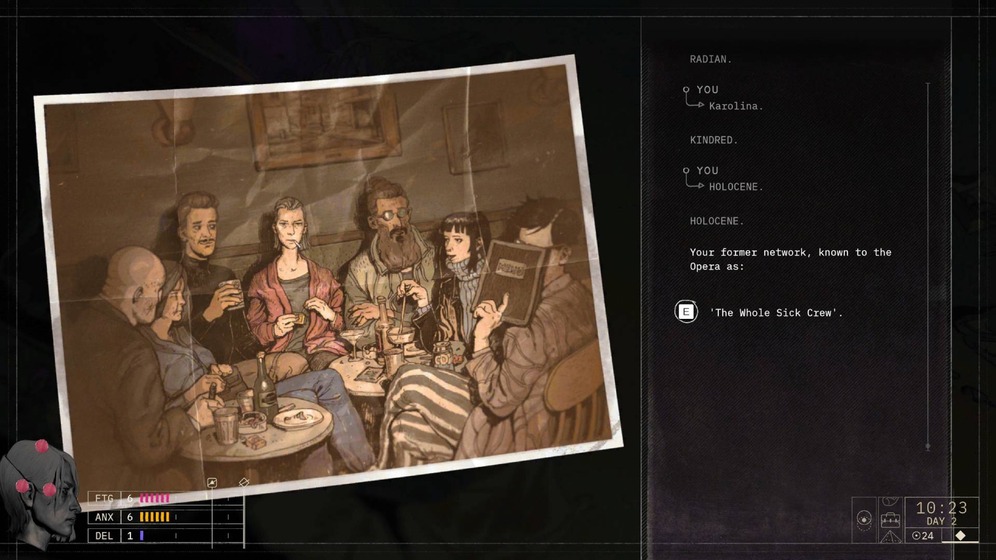
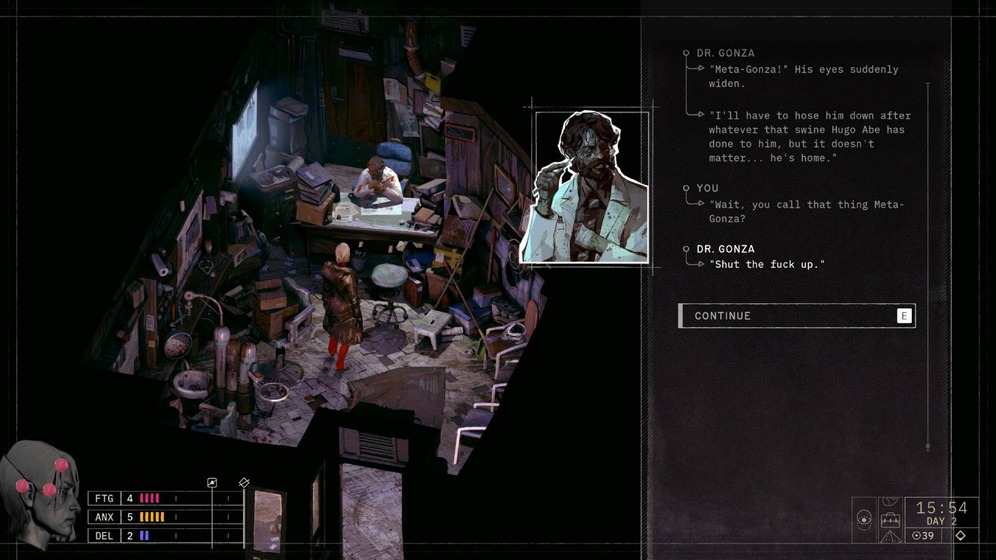
But in the same breath, here lies one of the game's main problems for me. The game's influence, according to various interviews, comes from the books of John le Carré, whose most famous series deals with a British secret agent protecting his homeland from KGB plots during the Cold War. Many of them dealt with moral questions—does the end justify all means—and this is very much felt in the game through many of the choices we can make. There's also a lot of emphasis on social and political elements during various dialogues, especially regarding communist ideology and the sexual orientation of quite a few characters. On paper, I have no problem with them appearing in the game, but they tend to be an almost central part of much of the responses we can give to various characters, and it was hard not to get tired of the subject.
The complaint about what probably managed to annoy me the most is actually related to the voice acting, and to files that either don't exist or aren't activated half the time, because overall? The voice acting itself is actually fine. But sometimes during dialogues you'll start to notice that suddenly the text being read doesn't match the text on screen, or you'll notice when the line starts being read that the voice actor begins saying something different from what appears on screen. The strangest part is that when it seems dialogues are supposed to get full narration, suddenly some lines are read and some aren't. This applies both to specific responses we can choose, and to the phenomenon where in the middle of a narrated dialogue, suddenly the second part isn't voiced but the third part is. There's no reasonable explanation for all this—there's a lot of text in this game, and it's unclear whether this is the developers' choice or some kind of bug, but it manages to take me out of the experience.
The Sixteenth Agent
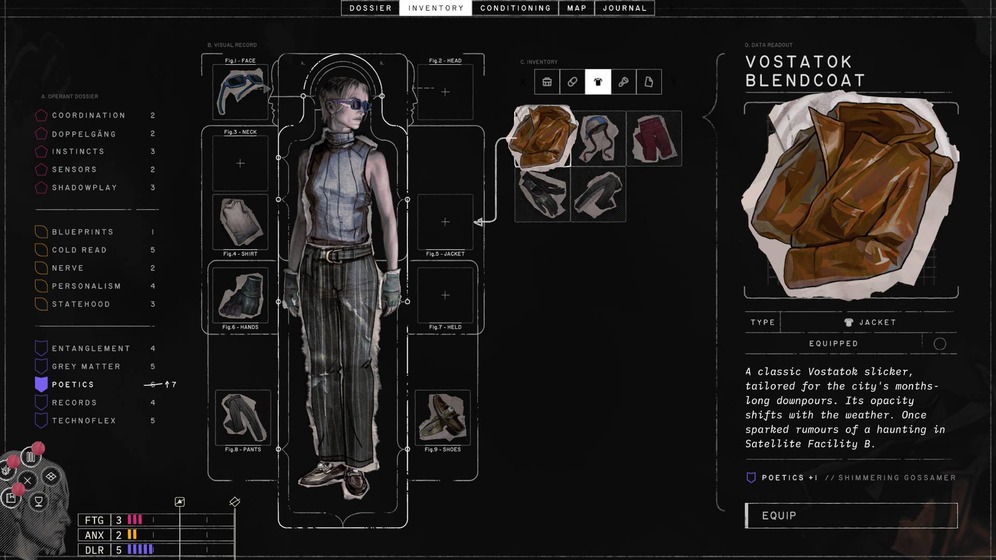
Let's now talk about what really deserves all the praise here, and that's the role-playing system and the game's various mechanics. It definitely manages to get us invested in Hershel's troubles, and even though the game visually looks very similar to Disco Elysium, many of its systems don't work exactly the same way. Let's start with the first thing we see, which is the ability to choose our skills, divided into 3 categories—Athletics, Analytics, and Psychological skills. We have a screen with about 15 skills (roughly 5 fewer than in the previous game), and at first this will probably look almost like the same skills, but they're simply more focused here.
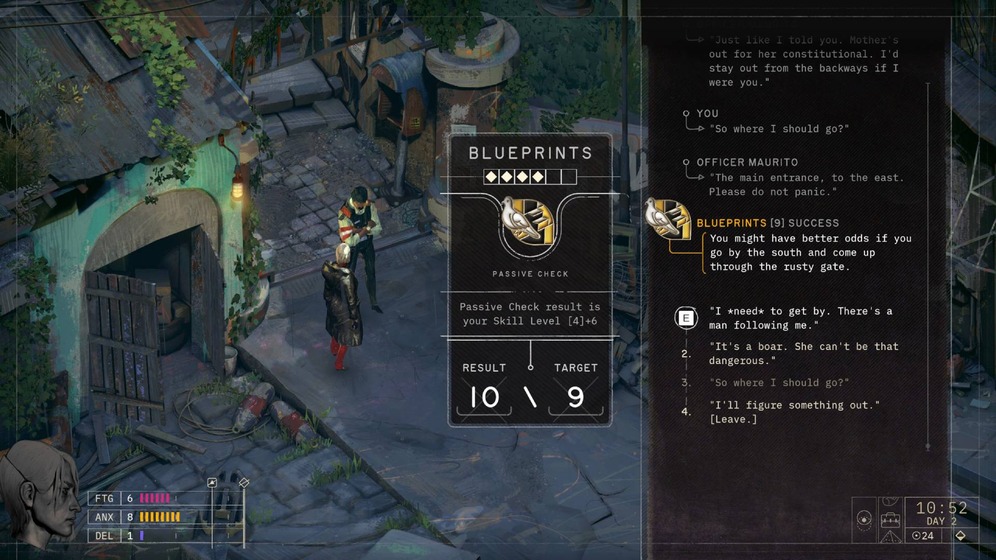
Depending on which skills we level up, different options during various conversations and choices will change. During conversations, comments based on the player's skills will pop up between one monologue paragraph and another. Similar to DND, comments will have a base score that the player needs to pass with a base indicator plus the skill level to get a certain comment. For example, if our Statehood is at a high enough level, we'll get a side comment regarding the answer an NPC gave us.
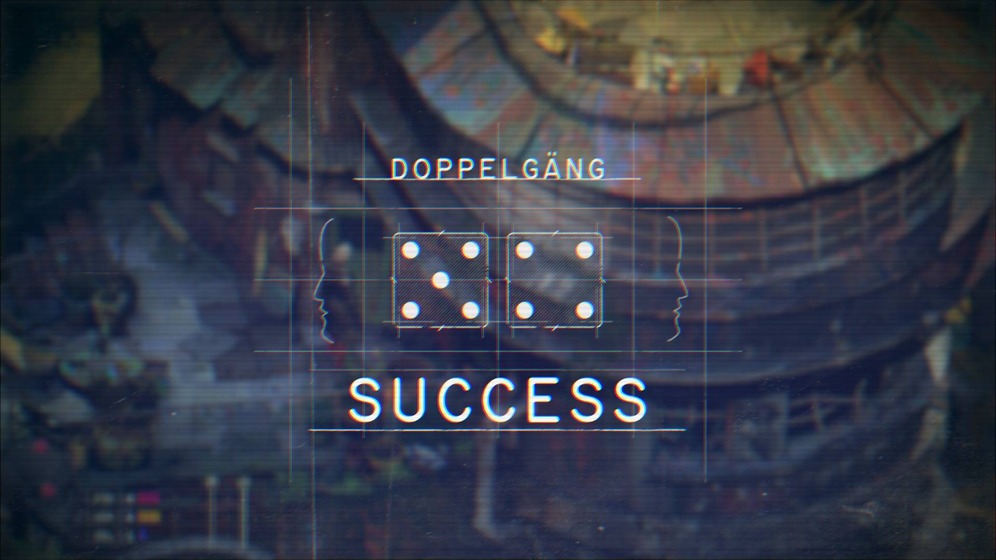
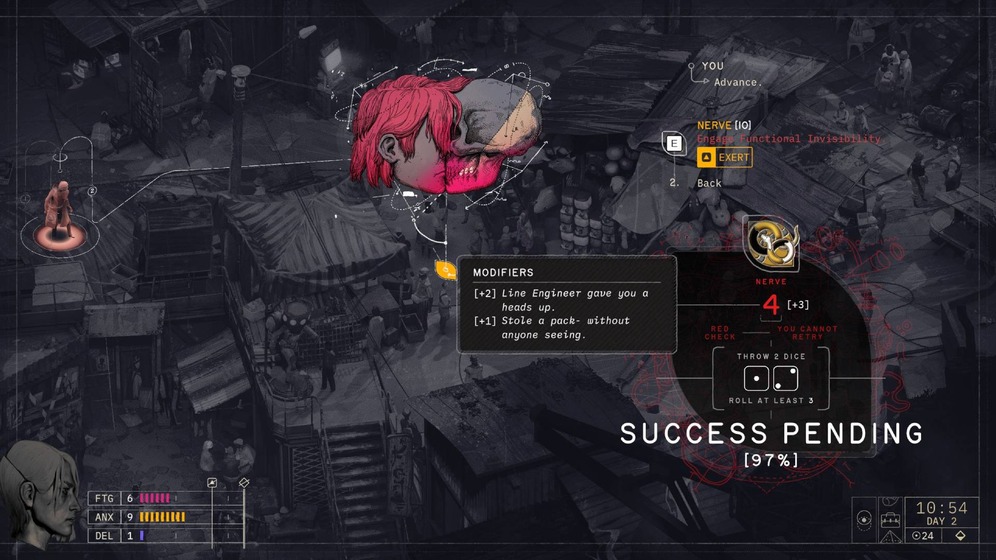
The other way skills affect Hershel's ability to perform certain actions also depends on dice rolls. Quite often we'll see that we have certain options to perform an action like trying to steal something in public or break down a locked door, and each action will have a given number that needs to be overcome with our skill level plus a roll of two dice (where's my D20?). If the total score is higher, we can perform quite a few actions, but at the start of the game we'll find ourselves quite often with low chances of performing certain actions (though you can also do plenty of save scumming if you know to save in time). At the same time, you can also risk yourself and add a third die by increasing stress, fatigue, and intoxication meters.
And here, let's talk about a very central part of this game's systems—the stress, fatigue, and intoxication meters. Certain events in the game can either raise or lower their levels, and if one of them accidentally reaches level 15 without us lowering it in time, we'll be forced to give up a point from one of our skills. While the meters are affected by various actions we take and decisions we make, you can also influence them with items like beers, coffee, and cigarettes—each affects the different meters by lowering some, but also by raising another. When Hershel goes to sleep, all these meters drop by 5, so you can control these meters even when the situation looks very stressful.
The Secret in Drugs
I said earlier that the game is visually similar to the developer's previous game, and you probably won't be particularly surprised to hear that both these games were developed on the Unity Engine, and this certainly contributes to some extent to this game's quite unique look, and perhaps also to the fact that it doesn't have overly demanding requirements. I ran the game on three devices—all handled the game without issue, including a relatively powerful PC, a laptop running on an aging 3050TI, and also on the Steam Deck. On all devices it ran very nicely, and the only place that was perhaps a bit odd is that while the Steam Deck is capable of running the game (and unlike what's listed on Steam, the game does have settings tailored for the device), its settings don't come absolutely ready, and if you run the game on the device, you should probably move the settings to a mode that suits the device, otherwise you'll run at 30 frames instead of the 50 or 60 that the device is capable of running the game at.
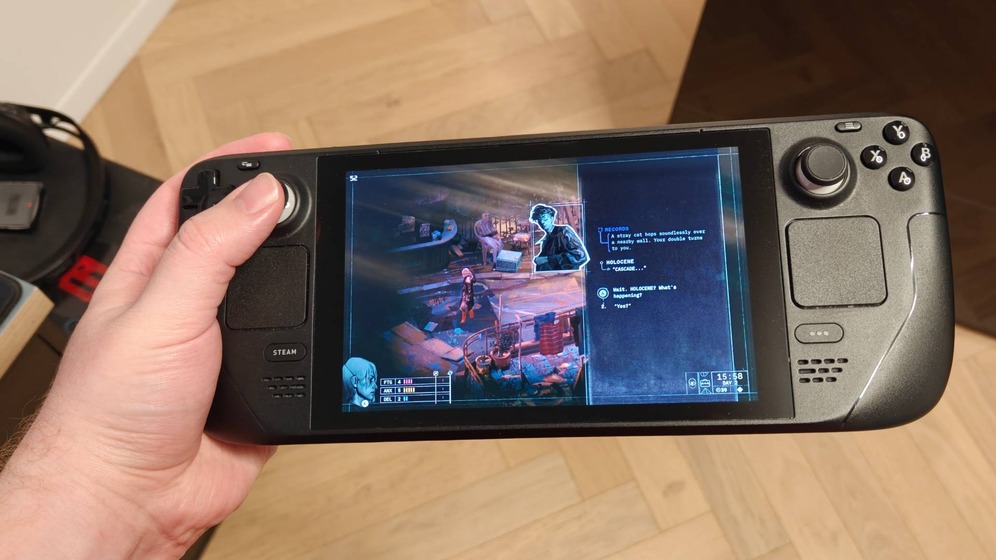
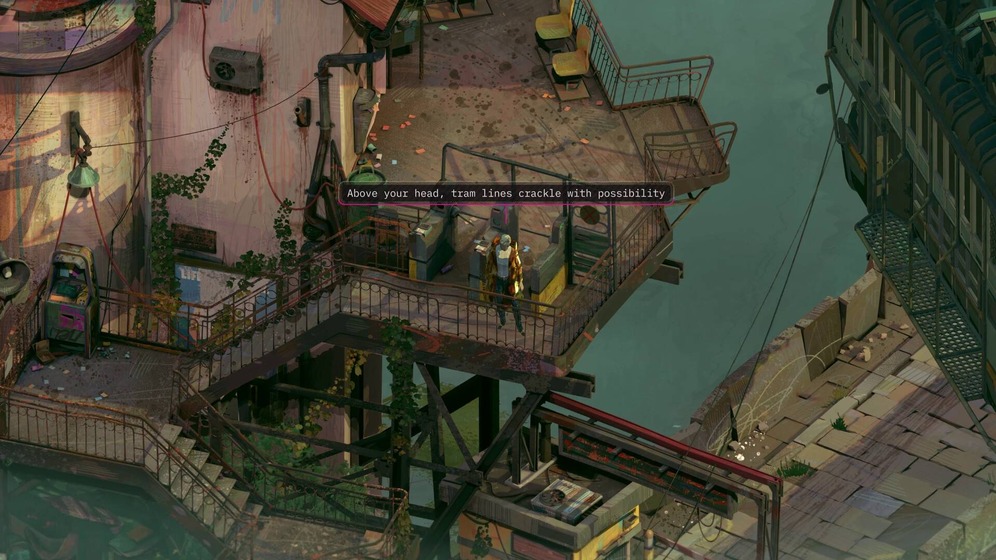
The game's art style is also very beautiful, and in the gaming landscape is also considered relatively unique and heavily influenced by psychedelic style. This is felt not only the moment we run the game, but also when we enter its world and enter the player's various menus—the cards representing our open missions all present very interesting drawings that make me wonder a bit about the connection between the illustration and the mission, but everything is accompanied by particularly colorful drawings. The only place where this style betrays the game is places like the map—some locations are marked unclearly by notes with different drawings and without a legend, making it very hard to understand what's where.
Finally, of course, we need to talk about the soundtrack, which honestly? There's nothing exceptionally interesting about it. I don't know what to actually expect from the game when it comes to ZA/UM, but the soundtrack is sometimes simply nonexistent, and when it does exist, it's particularly ambient—there's not much shaping the game's world. The only places I really managed to notice the soundtrack were in the main menu, when I opened the game's credits list (just to verify the game was indeed developed in Unity), and when I entered a very specific part of the city where the ambience was a bit more present. It's a bit disappointing because this is an element that could build this game even better and it's not felt enough, especially in a game where one of the talked-about characters is a singer character.
The Bottom Line
ZERO PARADES: For Dead Spies could be the espionage game everyone waited for after the dizzying success of Disco Elysium, but its dialogue can also irritate some players if they're not completely open to a somewhat different worldview. In the same breath, if you're going into a pure role-playing game experience, I think this is an experience you won't want to miss, with some of the most interesting systems the genre has to offer right now. If you can overlook inconsistent voice acting, you'll find plenty of enjoyment here.