Review: Resonance: A Plague Tale Legacy - Bye to the Rats, Hello to the Minotaur
Sophia gets her own story in this prequel that ditches the rat swarms for melee combat and dual timelines, but struggles to match the ambition of its ideas with shallow combat and pacing issues.
Sophia gets her own story, but did we really need it?
A review copy was provided to us by Focus Entertainment, thank you very much!
There's a very specific kind of confidence a studio needs to have to hand off its flagship series to a character no one asked to lead it. The A Plague Tale series built its identity around the characters of Amicia and Hugo, two hunted siblings whose bond carried some of the best narrative adventures of recent years. Asobo Studio's response to that success is, on paper, a bit odd: leave the siblings behind and build an entire prequel around Sophia, a side character from Requiem who barely got a full story arc last time.
Resonance: A Plague Tale Legacy turns back the clock to Sophia's youth, tosses out the rat swarms that defined the series' identity, and swaps stealth for face-to-face combat, parkour, and a dual timeline. It's a bold move that takes the series in a new and different direction, and for the most part, it works. But it's also a game that stumbles quite a bit over its own ambition, so calling it an excellent game would simply be a lie.
Rats - Out, Mythology - In
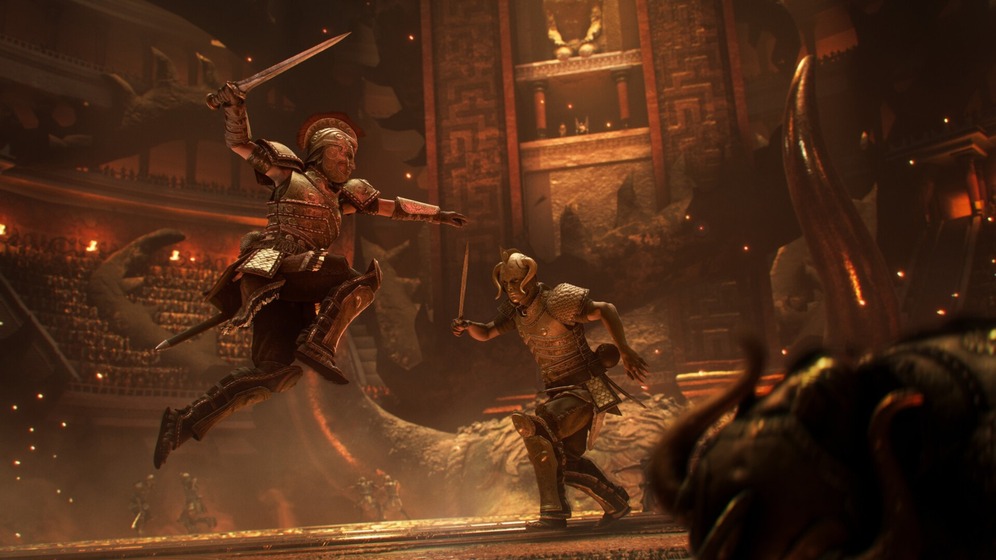
The decision to cut the rats was always going to be a headline in itself, and it's the right call. Recycling the swarm mechanic would have felt stale, and Asobo knows it. Instead, we get a story focused on Minoan civilization: Sophia experiences visions of Theseus navigating the Labyrinth and facing the Minotaur, and these flashback sequences run parallel to her modern search for answers on the island of the Minotaur. It leads to a story that takes place simultaneously across two different timelines, allowing an ancient tale to illuminate a modern one without feeling like padding, and these two timelines bleed into each other in ways that really pay off in the second half of the game.
The problem is in the foundation. The pacing of the first hour moves very quickly, rushing through different locations—starting from a monastery, a smuggler's camp, a beach landing—and asking you to care about a cast of side characters before you've spent any real time with them. One of them dies shortly into the start of the game, and it's supposed to sting, but it doesn't, because the game simply hasn't earned it yet. Sophia herself develops into a compelling lead once the plot slows down enough to let her breathe, mostly thanks to fantastic voice acting and motion capture that carry entire scenes. This is a story that gets better the more time you spend with it, which is a pretty odd way to start a game.
A Blade That Doesn't Learn New Tricks
The combat system is where the desire to be a bigger, bolder A Plague Tale game runs into trouble. The core gameplay loop sounds fine on paper: attack, parry, heavy strike, rinse and repeat. The problem is that it's still exactly the same system in hour eight. Sophia's skill tree caps out at around six real abilities, like the ability to pull enemies toward you with a rope and knock them to the floor, or perform a well-timed dodge that causes Sophia to deflect the enemy and throw them into other enemies. But that's where it ends, and there's no meaningful way to build the character in deeper directions, or unlock different attacks or combos, and enemy types very quickly become a familiar set of guy with sword, guy with shield, guy with spear, and one big guy in each fight. It's pretty shallow, and shallow systems can't hide in a 15-hour campaign.
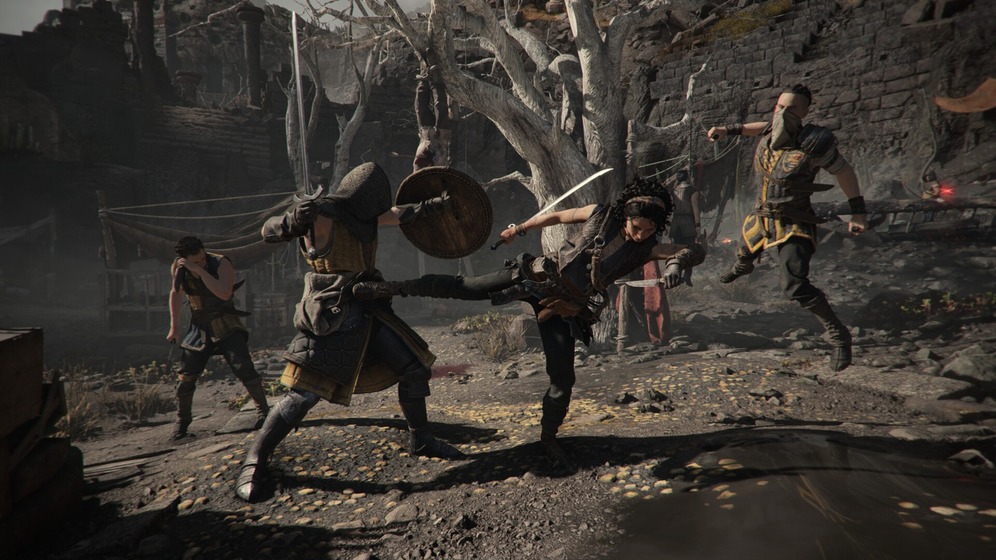
It also doesn't really help that Sophia's combat animations just aren't that fun to watch. They're pretty stiff, without the feel of smooth motion that flows from attack to attack—everything happens pretty quickly and, to be honest, pretty janky. The game really loves to show off that it uses contextual animations, meaning if an enemy is near a wall and is one attack away from death, Sophia will shove them into the wall and slit their throat with her knife, in the style of The Last of Us or Uncharted games. It's cool, and it's always fun to see how far we've come with gaming technology that allows us to do things like this, but it's pretty disappointing that these kills only have about two animations that alternate between them, which turns these very cool animations into pretty repetitive ones, and by hour ten—boring.
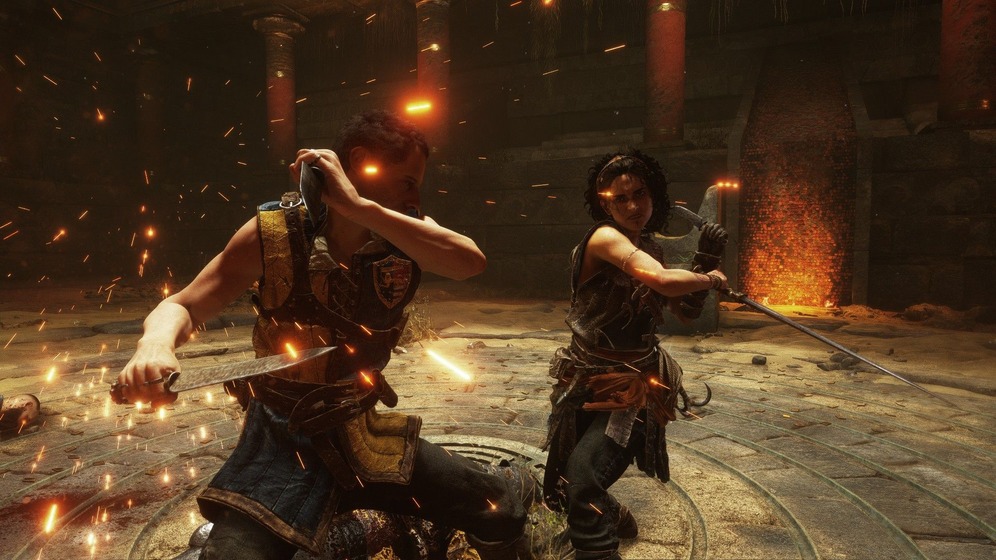
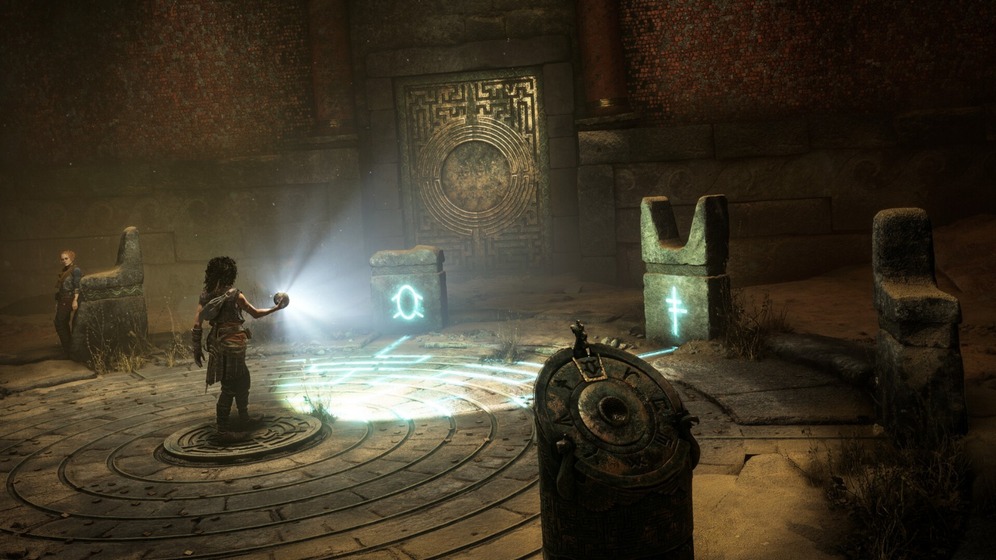
The game's low point comes, unfortunately, pretty early on. Its third chapter traps you in a temple built entirely around light-routing puzzles, with mirrors that need to be rotated in a specific order to route two separate light beams to their targets. It's not a bad puzzle (though Uncharted did it first), it's just a bad idea to build an entire chapter out of it. The pacing becomes: mirror puzzle, fight soldiers, mirror puzzle again, and it repeats enough times that the momentum the game built in the first two chapters simply stops. This is the only place where Resonance's pacing goes from steady to frustrating, where everything feels very stuck, fights become sparse, and the plot doesn't move an inch. Everything the game does so well in its opening and closing chapters freezes here, and it's hard to shake that feeling once you've been through it, even when the game manages to recover afterward.
Where Asobo Still Shows Off
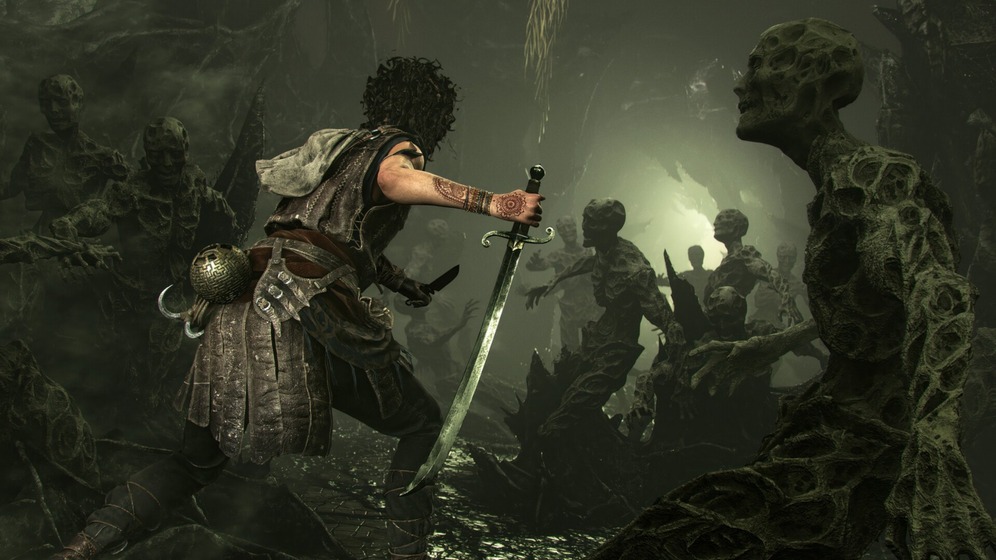
None of this touches the visuals and presentation, which are truly the best work Asobo has put out to date. The island of the Minotaur is a stunning place, with sun-drenched ruins that alternate with glowing caves and enormous bull statues that dwarf everything around them. The Theseus sequences also deserve their own mention. They're staged like massive gladiator action sequences inside a crumbling colosseum, and they deliver some of the most visually beautiful moments in the game.
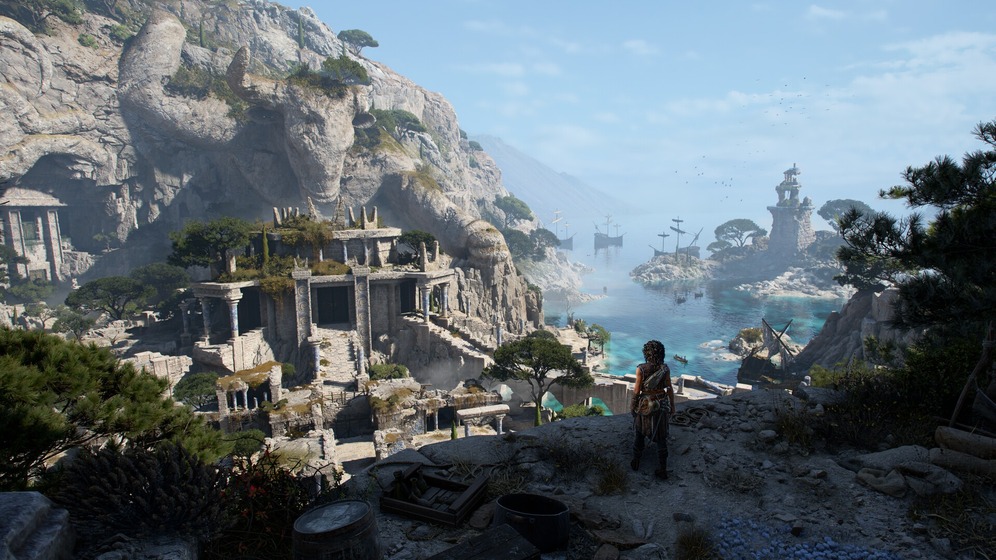
Performance-wise, the game runs smoothly without any frame drops I experienced on the base PlayStation 5. It manages to look excellent, with stunning lighting effects, highly detailed models, and superb graphical quality that doesn't fall short of the previous games in the series. Simply a feast for the eyes.
The Bottom Line
Resonance: A Plague Tale Legacy is a beautiful and ambitious prequel that simply can't close the gap between its ideas and their execution. The dual timeline structure and the move away from rat swarms were the right decisions, and Sophia honestly earns her place as a lead character by the end credits. But the combat system doesn't evolve beyond the game's first hours, the jank in the animations is noticeable enough to annoy, and chapter 3 simply stops the game dead for nearly an hour with puzzles that wear out their welcome pretty quickly. Totally worth playing (but maybe wait for a sale), unless you're die-hard fans of the series—just don't expect it to match what came before it.