Review: Resonance: A Plague Tale Legacy - A Beautiful Prequel That Loses Its Footing
Asobo trades rats for swords and Greek myth in a gorgeous prequel about Sophia's youth, but a repetitive combat loop and a puzzle-choked Chapter 3 keep it a rung below the series' best.
There's a specific kind of confidence a studio needs to hand its flagship series to a character nobody asked to lead. A Plague Tale built its name on Amicia and Hugo, two rat-hunted siblings whose bond carried two of the better narrative adventures of the last few years. Asobo Studio's answer to that success is, on paper, a strange one: walk away from both of them and build an entire prequel around Sophia, the side character from Requiem who barely got a full arc the first time around.
Resonance: A Plague Tale Legacy turns the clock back fifteen years to Sophia's youth, strips out the rat swarms that defined the series' identity, and replaces stealth with toe-to-toe combat, parkour, and a running dual timeline where Sophia's visions of Theseus and the Minotaur mirror her own trauma. It's a bold swing, and for long stretches it lands. It's also a game that trips over its own ambition often enough that calling it great would be dishonest. This is a good prequel wearing a great one's armor.
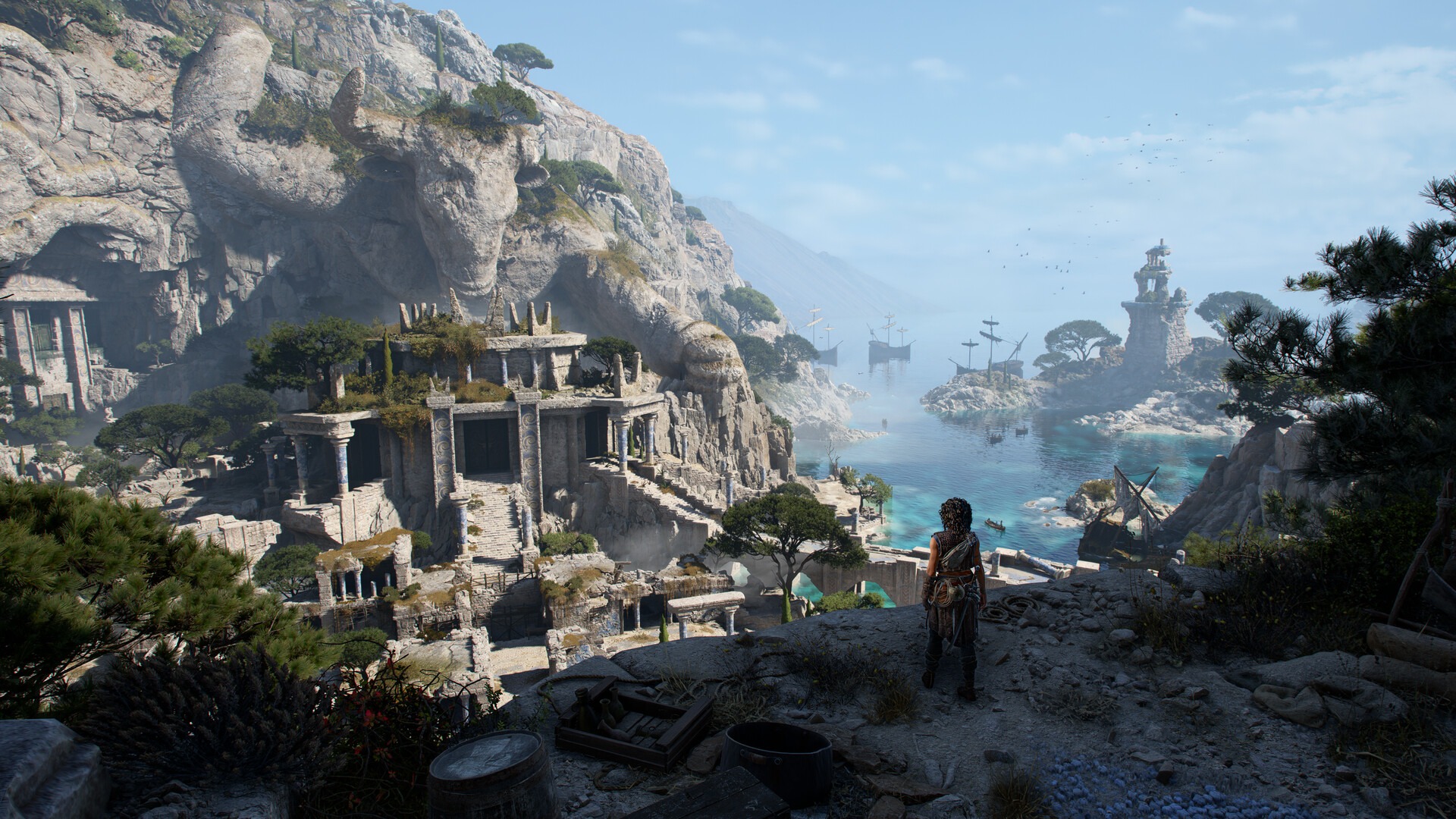
A Prequel Without Its Rats
Cutting the rats was always going to be the headline decision, and it's the right one. A rehash of the swarm mechanic would have felt like a retread, and Asobo clearly knows it. In its place is a Minoan myth device: Sophia experiences visions of Theseus navigating the labyrinth and facing the Minotaur, and those flashback sequences run in parallel with her present-day search for answers on Minotaur's Island. It's a clever structural idea, letting an ancient story comment on a modern one without ever feeling like padding, and the two timelines bleed into each other in ways that pay off by the back half.
The problem is the ground floor. The opening hour rushes through a handful of locations, a convent, a smuggler's camp, a beach landing, and asks you to care about a crew of secondary characters before you've spent any real time with them. One of them dies within the first fifteen minutes, and it's meant to sting, but it doesn't, because the writing hasn't earned it yet. Sophia herself grows into a genuinely compelling lead once the plot slows down enough to let her breathe, helped enormously by a terrific voice and motion-capture performance that carries scenes the script hasn't fully written yet. It's a story that gets better the longer you spend with it, which is a strange way to start a game.
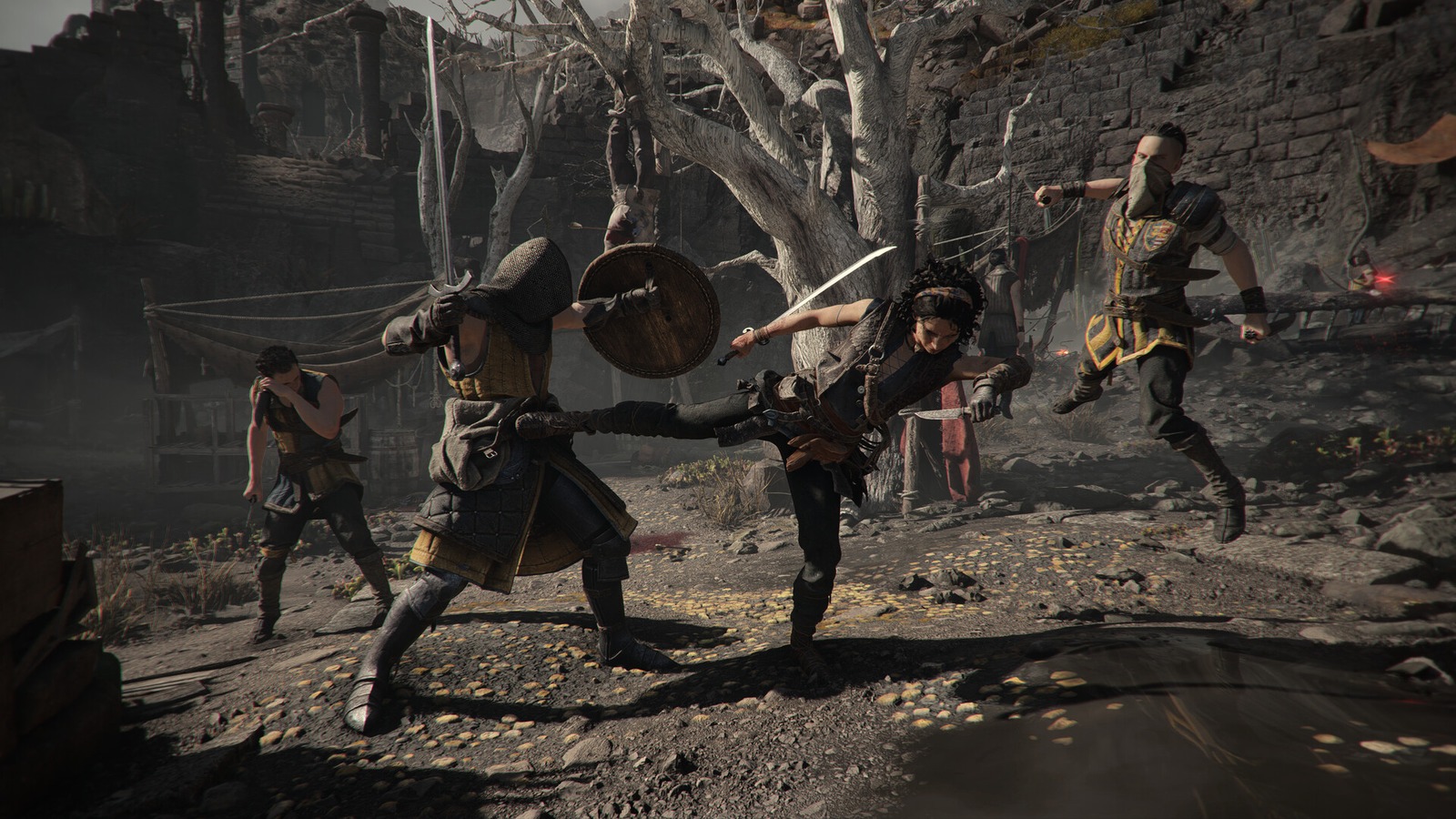
A Blade That Never Learns New Tricks
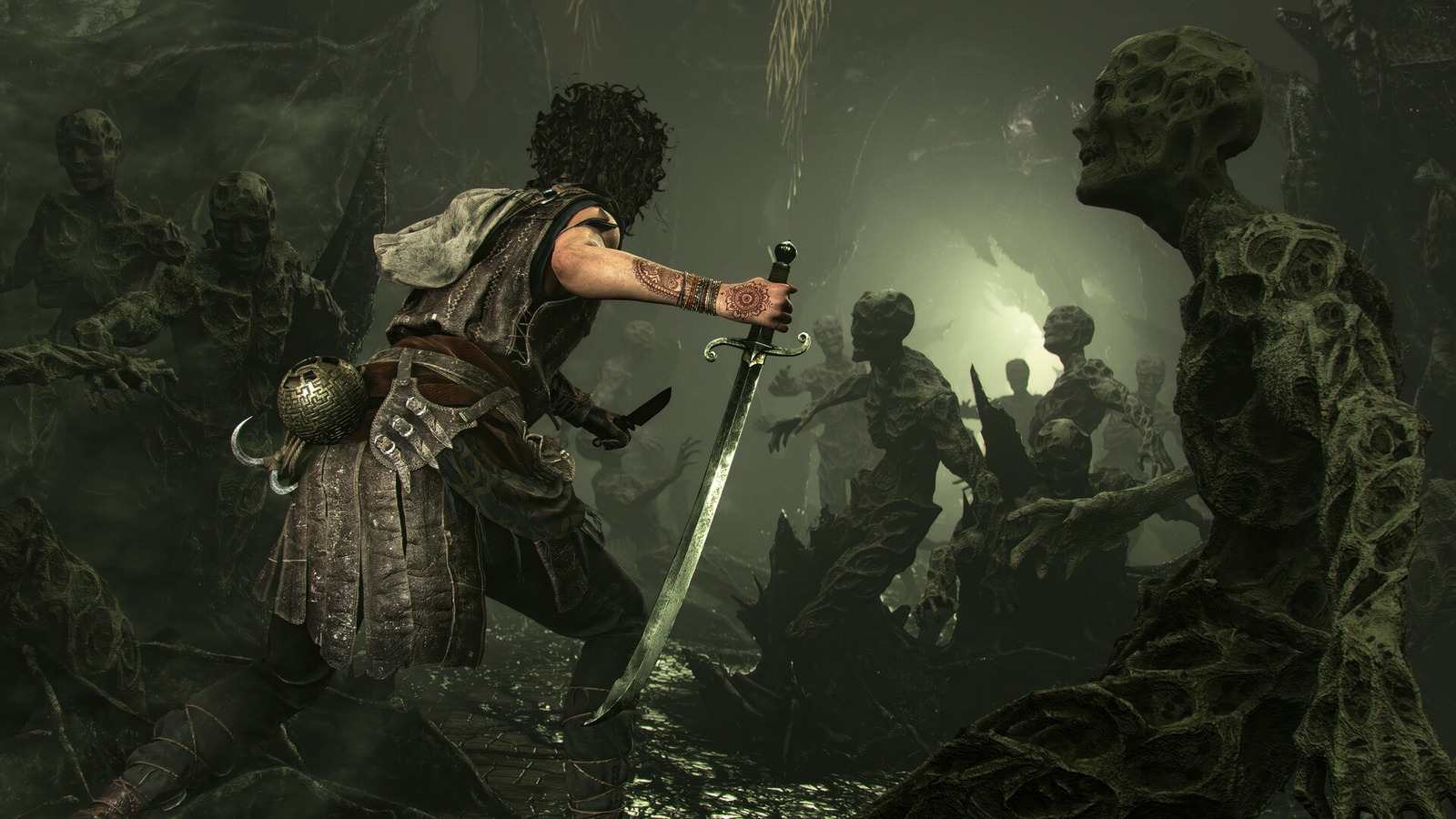
Combat is where the pitch to be a bigger, bolder A Plague Tale runs into trouble. The core loop reads fine on paper: attack, parry into a stagger, land a heavy hit, repeat. It looks vicious in cutscenes, all momentum and follow-through, and the first few encounters genuinely feel kinetic in a way the old stealth-only games never attempted. The trouble is that's still the loop in hour eight. Sophia's skill tree tops out around six real abilities, there's no meaningful way to build toward increased stagger damage or alternate openers, and enemy types settle quickly into a familiar lineup of sword guy, shield guy, spear guy, and one big guy per fight. None of it is broken. It's just shallow, and shallow systems don't hide well over a fifteen-to-twenty-hour runtime.
The rough edges extend past design into execution. Frame rate dips crop up during heavier fights regardless of platform, and more than once a cutscene botches a character spawn entirely, Sophia briefly T-posing before the animation catches up, or clipping half into a bed during a dream sequence. None of it derails the game, but it chips away at a combat system that was already working with a thin margin. When the fighting is this repetitive, jank like that stands out more than it would in a game with deeper mechanics to distract you.
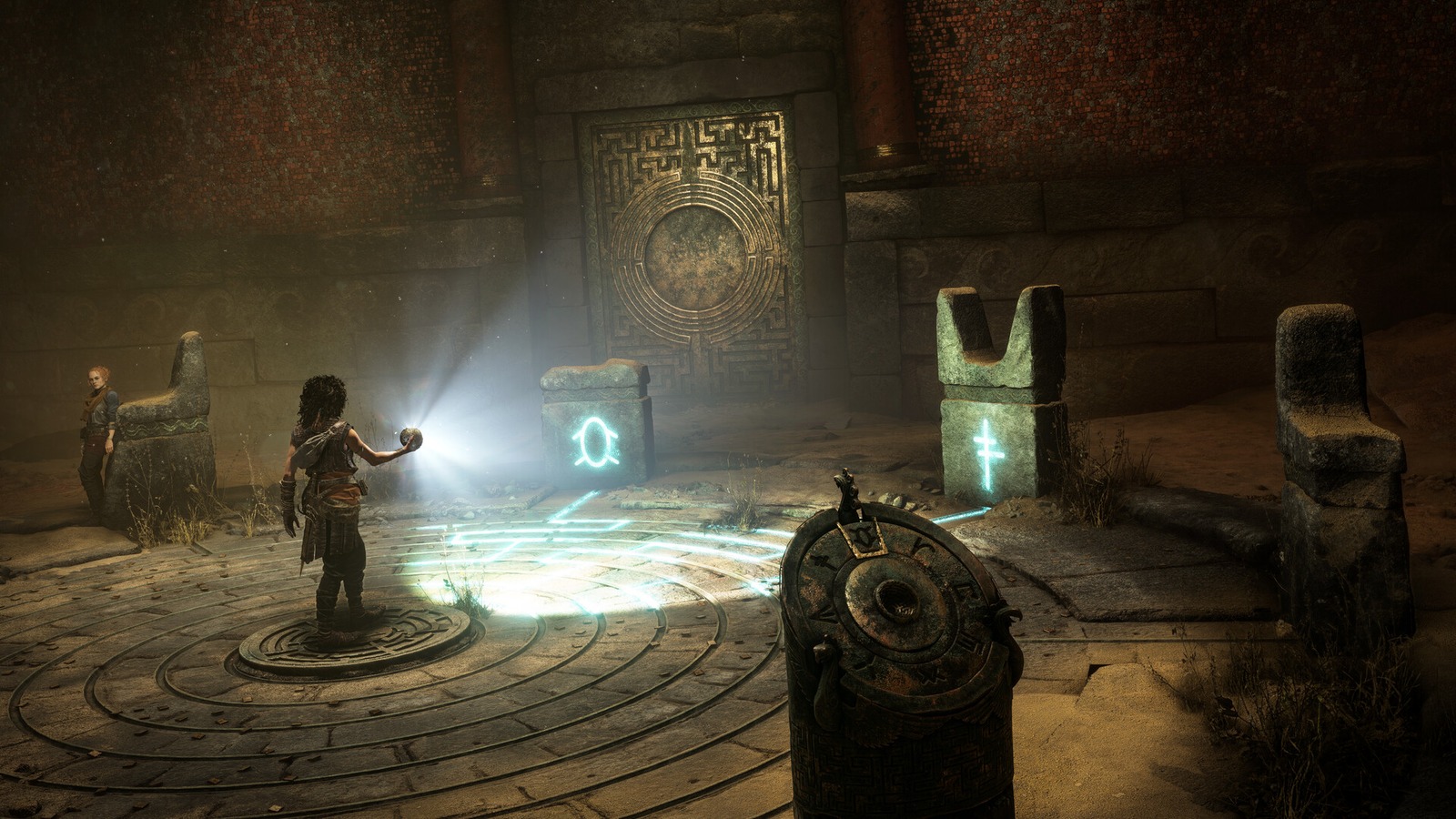
Where the Story Grinds to a Halt
If there's one section of Resonance that critics landed on almost unanimously as the game's low point, it's Chapter 3. The chapter parks you in a temple built entirely around light-routing puzzles, mirrors and prisms that need to be rotated in sequence to route two separate beams to their targets, all while a stalker creature patrols the room and forces you to reposition mid-solve. It's not a bad puzzle in isolation. It's a bad idea to build an entire chapter out of it. The rhythm becomes mirror puzzle, fight off soldiers, mirror puzzle again, and it repeats long enough that the momentum the first two chapters built simply stops.
This isn't just a personal gripe, either. Reviewers across the board flagged the exact same wall: an overabundance of light puzzles that are technically varied but thematically identical, stacked into Trial sequences that would have been stronger with three or four of them cut entirely. It's the one place where Resonance's pacing goes from uneven to actively frustrating, a full hour where exploration stalls, combat gets sparse, and the plot doesn't move. Everything the game does well in its opening and closing chapters gets put on hold here, and it's hard to shake the feeling once you're through it, even as the game recovers afterward.
Where Asobo Still Shows Off
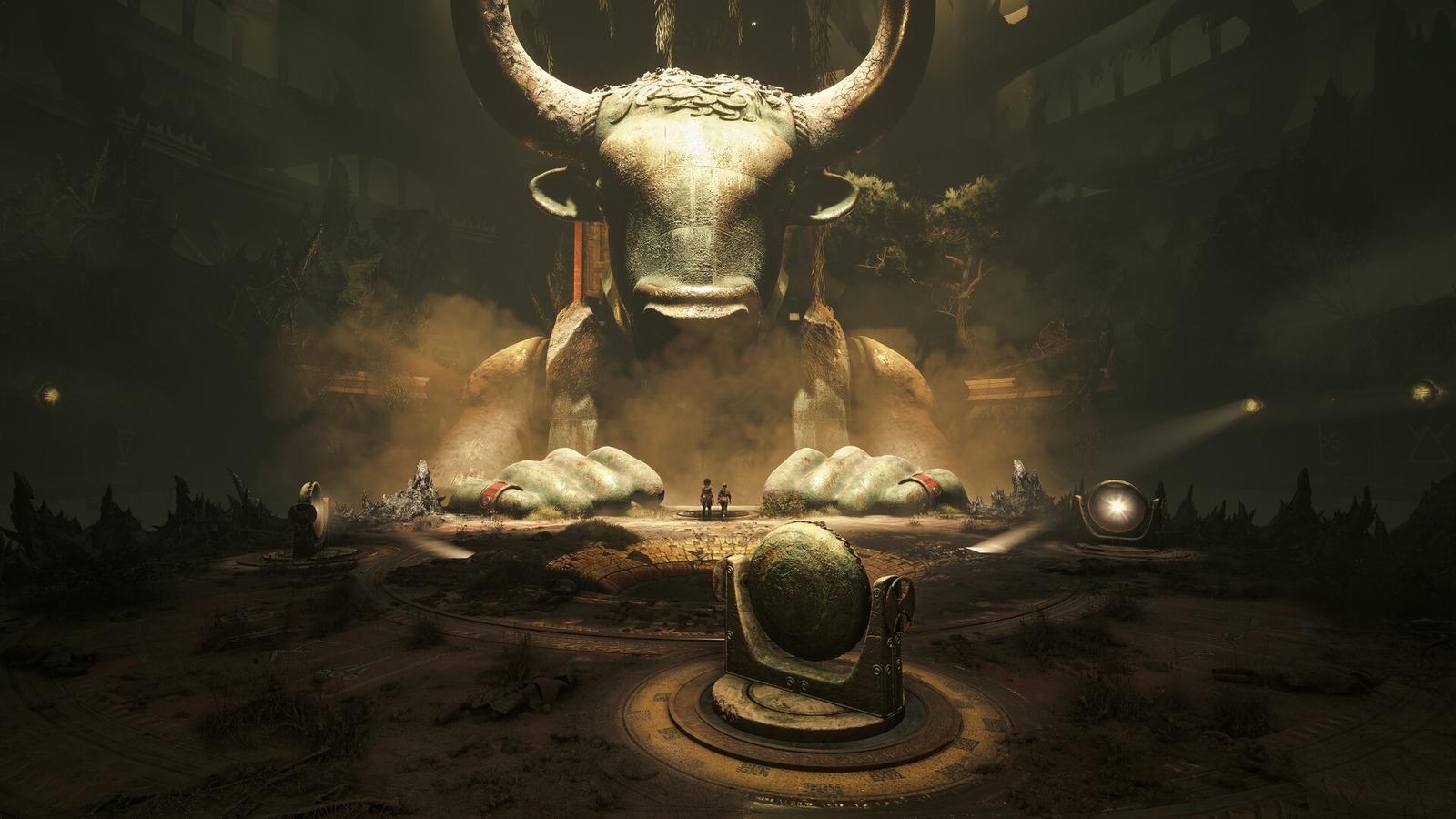
None of this touches the presentation, which is genuinely the best work Asobo has put out. Minotaur's Island is a gorgeous, oppressive place, sun-bleached ruins giving way to bioluminescent caverns and a colossal bronze bull statue that dwarfs everything around it. The environmental storytelling does a lot of quiet work, and the horror elements the series is known for haven't gone anywhere, they've just changed shape, trading rat swarms for something closer to body horror in the game's darker stretches.
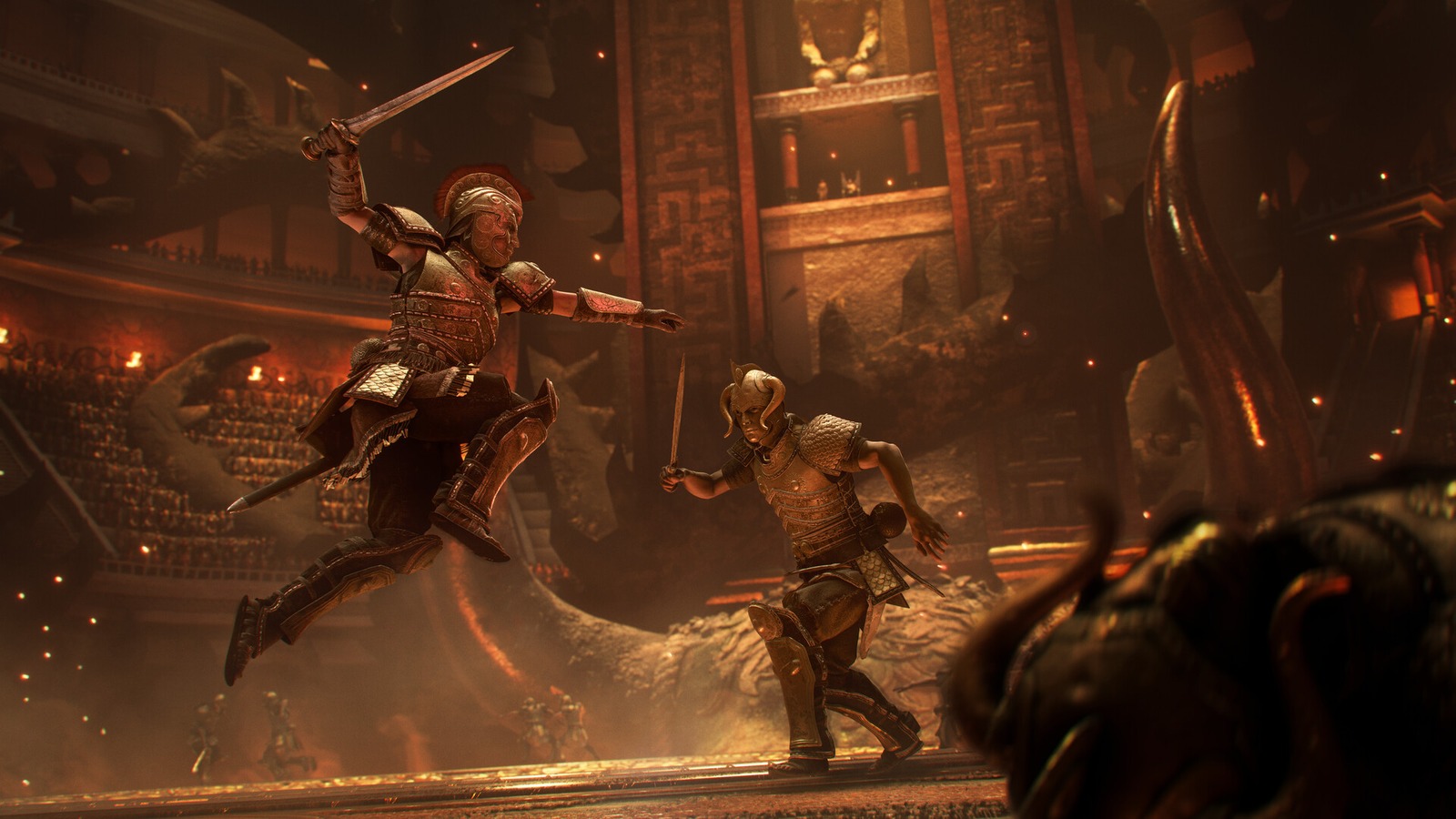
The Theseus sequences deserve their own mention. Staged like gladiatorial set pieces inside a crumbling colosseum, they're some of the most visually confident moments in the game, and they make the mythological half of the dual timeline feel worth the trip even when the modern-day plot is idling. It's a reminder of what Asobo is capable of when it isn't fighting its own puzzle design.
The Bottom Line
Resonance: A Plague Tale Legacy is a handsome, ambitious prequel that never quite closes the gap between its ideas and its execution. The dual-timeline structure and the shift away from the rat swarm were the right calls, and Sophia earns her spot as a lead by the credits. But the combat doesn't grow past its opening hours, the animation jank is noticeable enough to notice, and Chapter 3 stops the game dead for the better part of an hour with a puzzle gauntlet that overstays its welcome. It's a good game surrounded by the outline of a great one, and Asobo's talent is obvious even when the design choices around it aren't. Worth playing, especially for series fans, just don't expect it to match what came before.