Review: Onimusha: Way of the Sword - Golden Era
After a 20-year hiatus, the Onimusha series returns with a stunning new entry that revitalizes the franchise and proves 2026 could be Capcom's best year yet.
To be completely honest, it seems like nothing can stand in Capcom's way, and this year could be their perfect year in many respects. It started in February with Resident Evil Requiem, the new game in the beloved horror series that received tremendous acclaim, continued in March with the excellent Monster Hunter Stories 3, and then in April with Pragmata which left not a single dry eye on the internet. But after a brief break from new games, and after 20 years of waiting, the Onimusha series returns with a particularly shiny new game. Was the wait worth it? Is this year about to be Capcom's best in their golden era?
Death Is Not the End
Let's start by answering the question that's probably hovering over this game: after 20 years without new games, do we need to know the story of the previous games in order to jump into this one? Well, the short answer is not necessarily. The longer answer is that the time period in which Way of the Sword takes place, the Edo period, is not the same period in which the previous games take place (the Sengoku period). In addition, our protagonist is a new character, and the familiar concepts from the old games are re-explained so that new players don't need to do homework before they get to the new game.
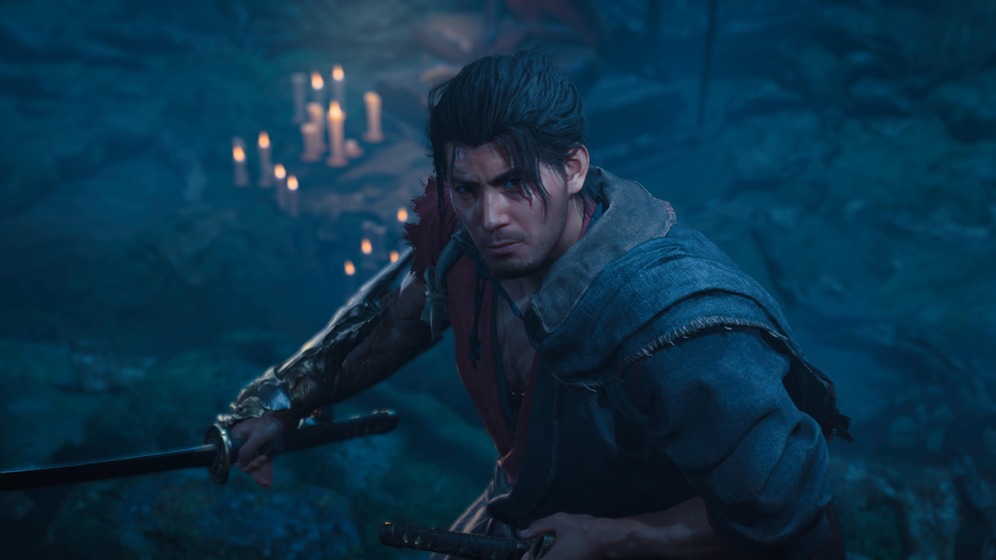
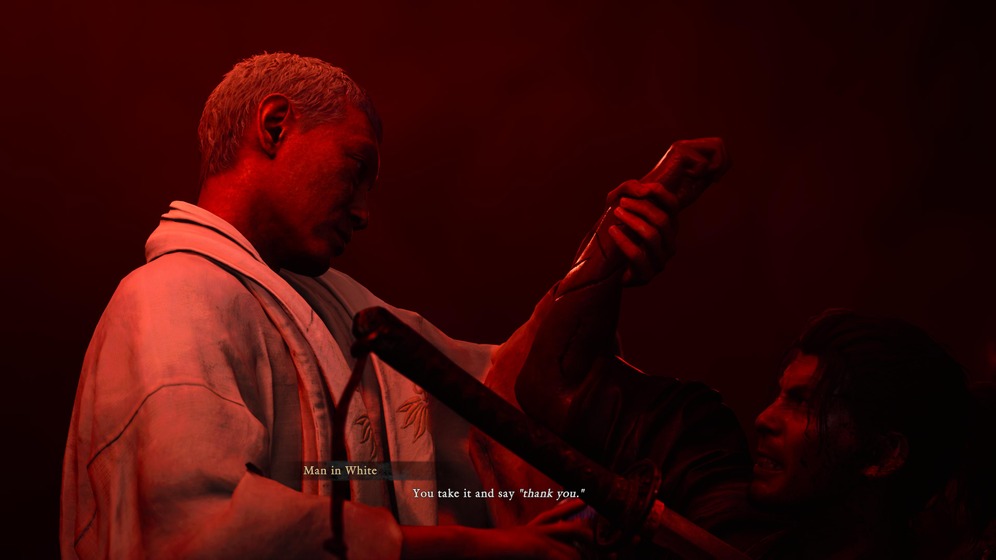
Our story follows Miyamoto Musashi, a samurai who wants to become the strongest swordsman in Japan by challenging all the powerful dojo masters in the country and making a name for himself. One day he encounters an enemy he simply can't handle - the Genma, demons with physical power that surpasses his own. After Musashi reaches death's door, he receives an offer from a mysterious person that's an offer he can't refuse. He's forced to wear a gauntlet that grants him physical power he never had in life and strengthens him on the condition that he absorbs as many souls as possible into it. He returns to consciousness and begins a journey in which he'll try to rid himself of the gauntlet and return to his previous life in which he sought to become the strongest samurai in Japan.
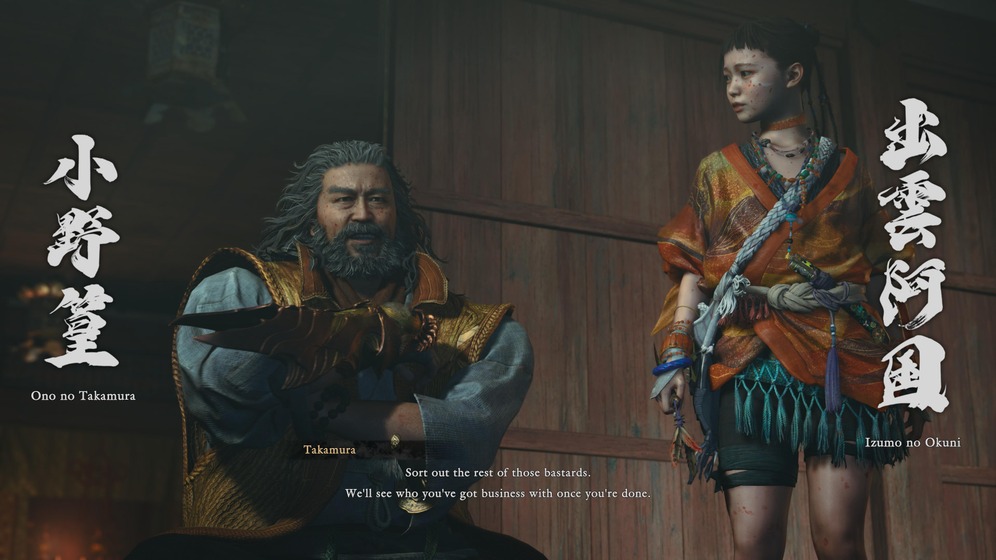
Musashi's quest brings him to a temple in Kyoto, where he meets Takamura and Okuni. Takamura is tasked with keeping the gates of hell closed to prevent demons from escaping into the world of the living. He asks for Musashi's help in closing the gates of hell that have opened around Kyoto, so he can continue to ensure the doors stay closed - and in return, he'll help Musashi get rid of his gauntlet and return to his previous samurai life.
I'll say this with the utmost cautious honesty, but in reality? The trailers for this game didn't sell me. They made me feel like I'd already seen what the game had to offer, and it felt like an experience I could wait for a while longer. In practice? Getting this game for review and playing it now made me realize how wrong that feeling was. This is one of my most beloved games of the past year, and I'll say it now - this year is without a shadow of a doubt Capcom's year in every possible way. In terms of story, I think I managed to derive much more enjoyment than I expected from the game, and I'm happy to say it also managed to get me into this series - something I didn't expect to see in 2026. The series that was dormant for so long returns, and it returns with a bang.
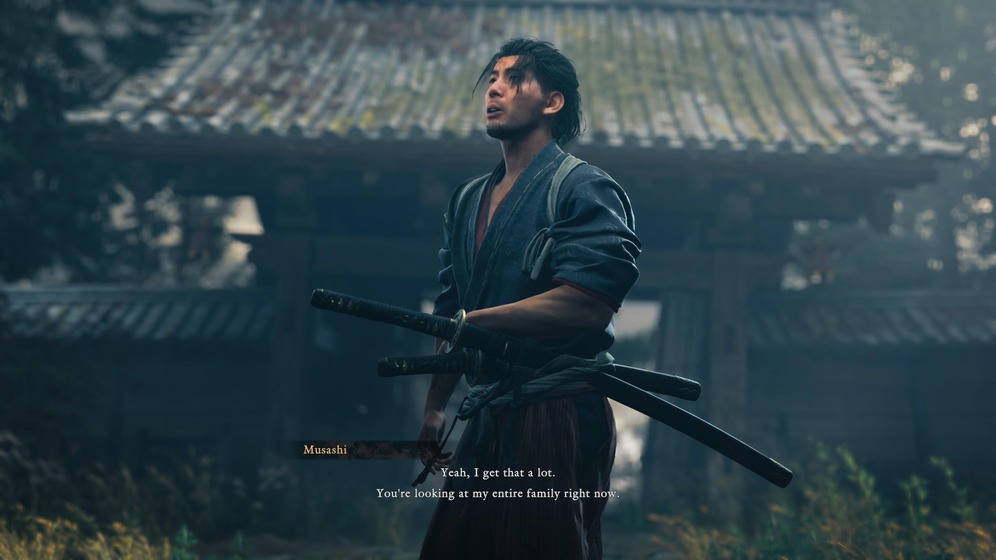
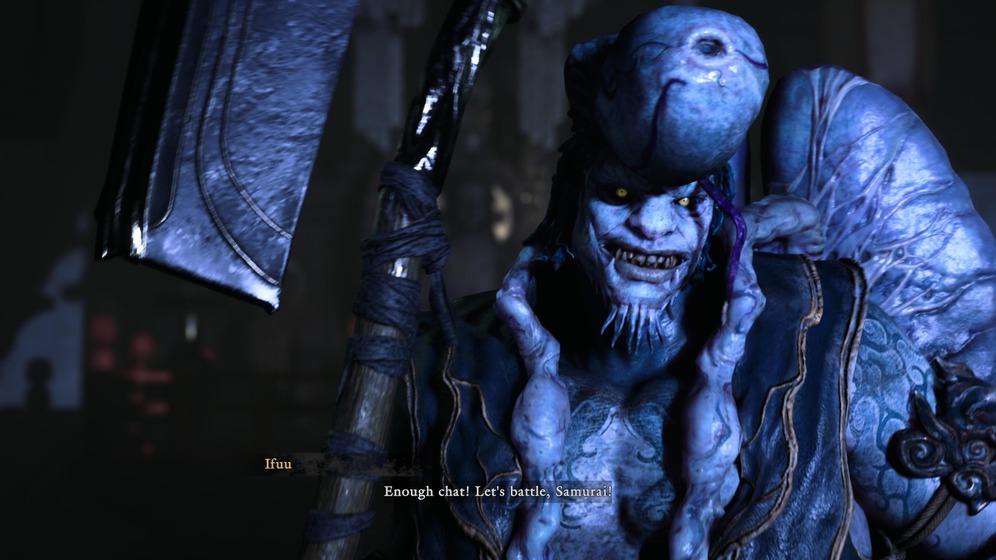
Musashi's character is a cynical character who doesn't enjoy having additional work beyond what he actually planned to do: prove himself as the strongest samurai with nothing standing in his way (except for a large crowd of other samurai). I love his character, and on a certain level it's very easy to connect to his personality and the way he's too lazy to deal with work that was forced upon him when he wasn't looking for or asking for it in the first place. Additionally, not to skip over the characters of Takamura, Shizuka and the rest of the main cast, the villains and enemies in the game are simply excellently crafted. The various bosses Musashi faces come with excellent voice acting, along with light writing, that simply make the experience 5 times more enjoyable. I managed to derive quite a bit of enjoyment from seeking more challenges in the game just to delve into more demon characters we can come into contact with.
Closing Hell
From the story we of course need to dive into the game's mechanics. I'll start by noting right now, while people for some reason expected to see descriptions of a Souls-like game - this isn't one, but rather an action-adventure game through and through. In the same breath, this doesn't mean it doesn't borrow several mechanics from Souls games, but each boss has different mechanics or at least patterns that when we play, we'll need to remember and learn to deal with.
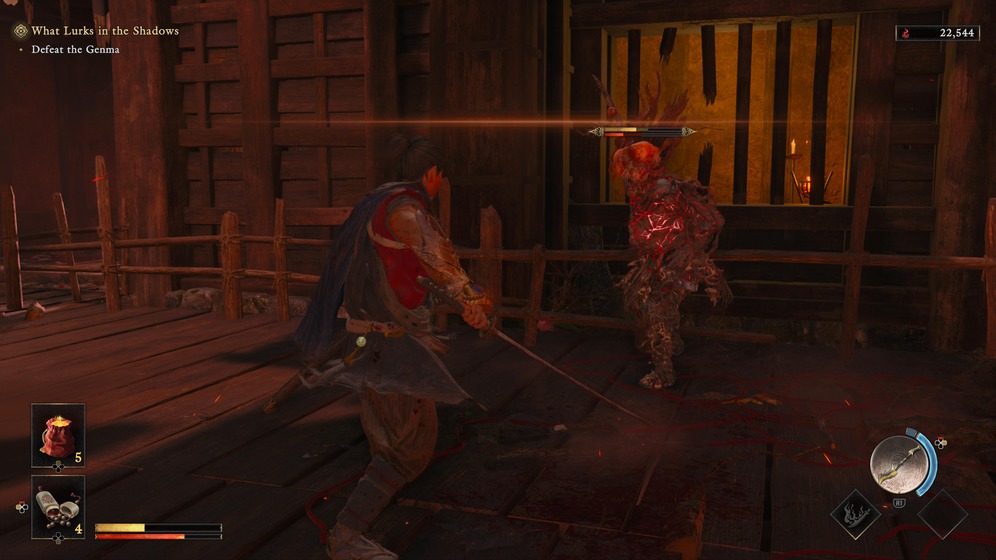
The basis of the combat system is very simple: we get two attacks, a fast one-handed attack and a heavy two-handed attack. With one hand we'll focus on damage, and the two-handed attack will focus on breaking enemy posture. All enemies (including bosses) have a health bar and a posture bar, and when we break an enemy's posture, we have an opportunity to do quite a bit of damage. But in the same breath, Musashi also has a posture bar that can be broken in exactly the same way.
So what are our defensive tools? We have the ability to quickly dodge various attacks, and we have the option to Block and Parry enemy attacks. From certain attacks it will only be possible to dodge or only to parry. Fortunately, the game also takes the trouble to mark for us whether we need to dodge or parry by marking the part with which enemies will attack us. This leads to a situation where we sometimes have tutorial windows until relatively deep parts of the game, which is a bit strange, but the combat system itself is very enjoyable. Executing Parry at high frequency will lead to a situation where each deflection will reduce the enemy's posture bar less and less, which encourages use of the Deflect mechanic, which is a slightly harder block to execute but rewards much more in terms of damage to the posture bar.
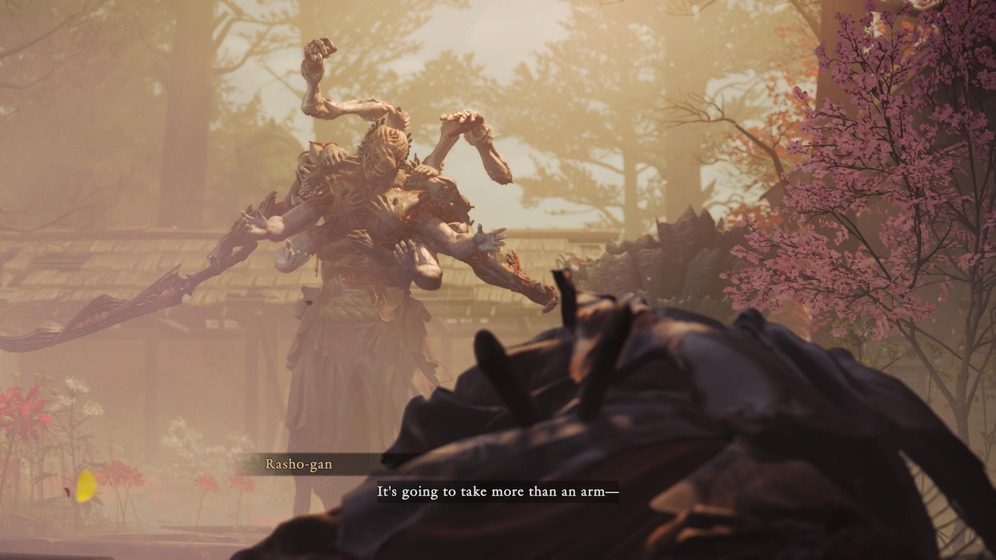
Along with this, I'll note that Musashi sometimes feels relatively cumbersome. The only action that can Cancel other actions is the parry action, but other actions, like dodging or healing, only come out one after the other. This made me feel like some of the boss battles suddenly became very frustrating (but part of it could also be my Skill issue), and I still very much enjoyed most of the fights.
To the basic combat system we'll also add various secondary weapons that we unlock throughout the game. There's a fairly high number of special weapons, each with its own effects and unique use that can help us during battle, like a pair of daggers that will extract souls from our enemies, a spear that creates around Musashi a sort of short storm that distances and damages enemies (and will even turn into a fire storm if there's flame in the area), and other weapons like twin hammers designed to cause massive damage to enemy posture.
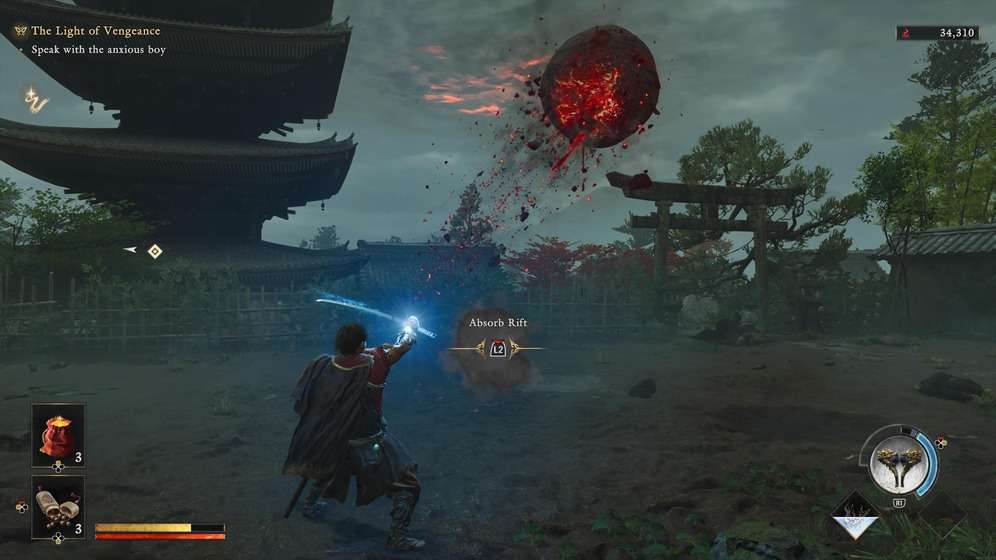
Now that I've also mentioned the souls matter (they were here before Souls games!), enemies that die or that we damage will release souls in 4 colors - yellow souls are related to Musashi's health that will fill his health bar, blue ones are related to Musashi's secondary weapon, filling the bar will allow you to use it, and red souls are part of the game's currency with which we'll perform ability upgrades. The fourth type of souls is designated for something else that I won't spoil here.
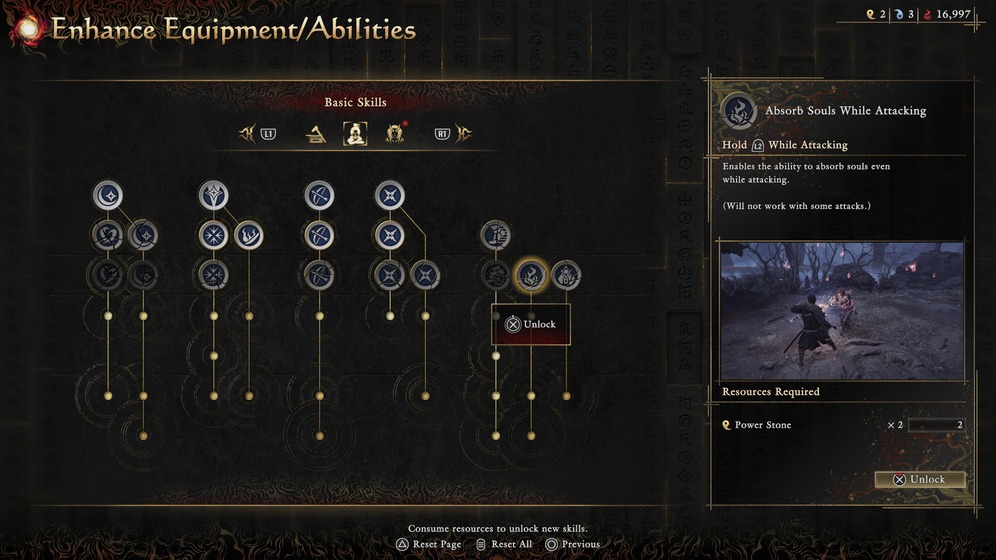
If I'm already talking about the game's currency, this game has a lot of different currencies related to quite a few things of Musashi's, in order to perform upgrades like to his equipment. His abilities require more currency types that we'll obtain from boss battles and more. At first it feels and looks very overwhelming when so much is missing, but all of this very much encourages going out and exploring the game's side content, from which we'll obtain some of the currencies and use them to strengthen abilities and upgrade Musashi's equipment throughout the game.
Japan Awaits Me
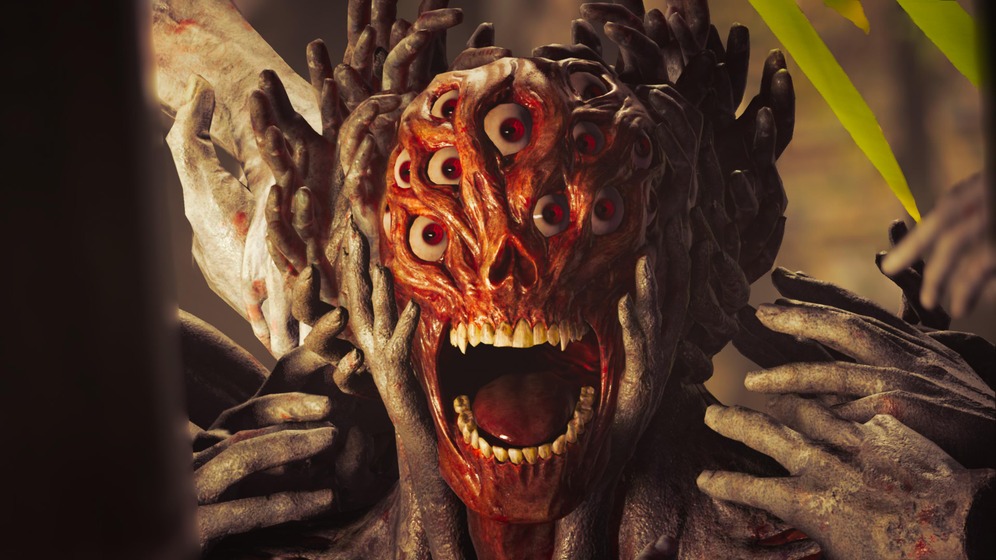
Now let's talk about something I must mention for the who-knows-how-many time positively: wow, the RE Engine simply never stops surprising for the better. Capcom's engine is already celebrating about 12 years of continuous development and almost a decade since the first game on it, but wow - it still looks and feels simply excellent. The character designs and their models in the game look simply fantastic, and the bosses simply look insane. If I thought Resident Evil Requiem looked crazy, I can't wait to run this game on PC just to see how far the graphics can be pushed. The game looks great on the base PlayStation 5, but I'm sure the graphics can be pushed even further.
In addition to all this, it is worth talking briefly about the integration of DualSense features. While there are things like support for the controller speaker (and quite a bit at that), the very extensive support for DualSense features in Resident Evil Requiem isn't really reflected here to the same extent. While there's controller vibration, there's no substantial use of the controller's Haptic Feedback like there is in Requiem. I understand that the Requiem experience is a bit more "intimate" when it comes to the game's atmosphere which is also in first person, and the same goes for Adaptive Triggers, but I feel like I'm missing it a bit right now. The Kyoto experience could be even more immersive, especially when the game also sometimes changes the weather - but we don't actually get any feature from that beyond the fact that it's mainly cosmetic. But alongside all this, the sound effects from the controller during combat are very satisfying, especially when you successfully parry an enemy correctly.
The Bottom Line
Onimusha wasn't a series I thought I'd get into in the near future. The games have been winking at me for a long time, especially with the remasters Capcom keeps releasing, but Way of the Sword has definitely planted in me the desire to also go back and experience the series' history. The new game that came to revive the series leaves me wanting more (and I definitely hope for more), and it certainly also comes to remind us that this year is without any doubt Capcom's year, with games that are nothing less than wonderful. I hope that in three months we'll remember this when we reach awards season - Way of the Sword demands recognition as one of the best action games of the year, if not the best among them.