Review: Mexican Ninja - A Winning Combo?
Mexican Ninja is a charming Roguelike that blends Beat 'em up mechanics with ninja combat in a fusion world of Japan and Mexico. While the fast-paced combat and progression loop deliver, the lack of voice acting and some balance issues hold it back from greatness.
Exceptionally chaotic, ridiculously silly - and that's exactly what we loved here
A review copy was provided to us by Madbricks, many thanks!
Similar to the Soulslike genre, the Roguelike genre keeps delivering new games. This time we took Mexican Ninja for a spin - is this the genre's new sweet treat?
Sweet Like Churros, Sour Like Chamoy
Mexican Ninja delivers a pretty bizarre premise for its world: we arrive at a place called "Nuevo-Tokyo," created after Japan and Mexico went to war with each other. The results of the war, beyond the chaos raging in every corner, led to the rise of the "Narkuza" - essentially Mexican mobsters who also became ninjas. We step into the shoes of a hero belonging to a rebel group, embarking on a quest to take down the five lords of the Narkuza organization.
Mexican Ninja's storyline looks, on paper, like an insane opportunity to tell us a weird, amusing, and quite unique story, but ultimately, sadly, the story quality here was far less impressive than I would have liked, mainly because the game doesn't bother to provide voice acting, which significantly diminishes the level of depth and quality the game could have reached had it included full voice acting for the various characters. That said, in a way that shouldn't surprise anyone, the plot does deliver quite insane creativity and variety throughout, so if you enjoy bizarre storylines that break the mold, Mexican Ninja is totally capable of delivering the goods here.
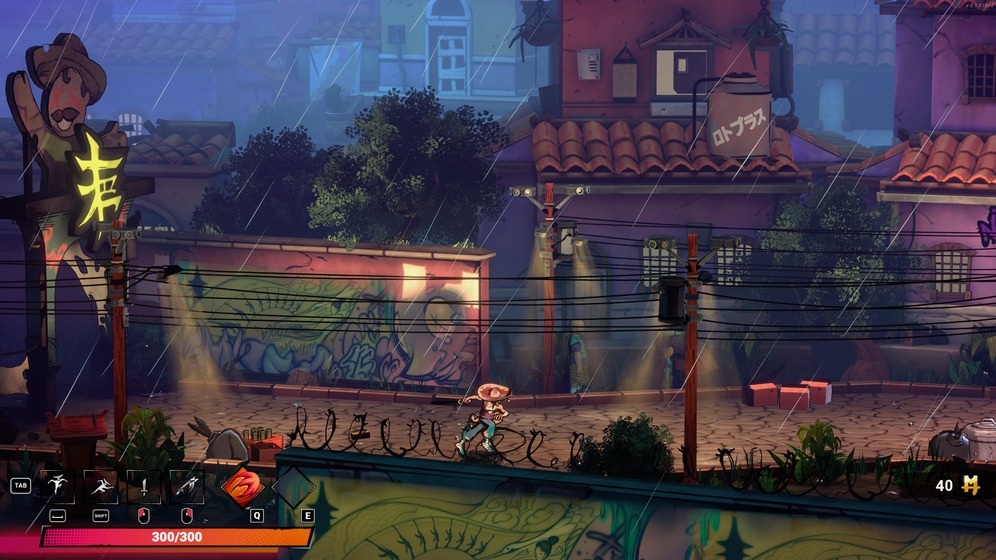
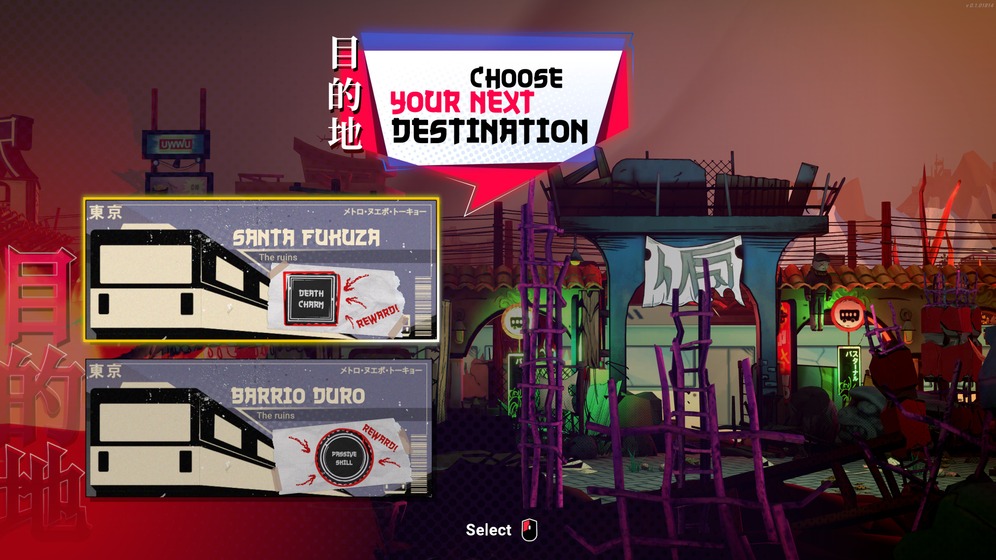
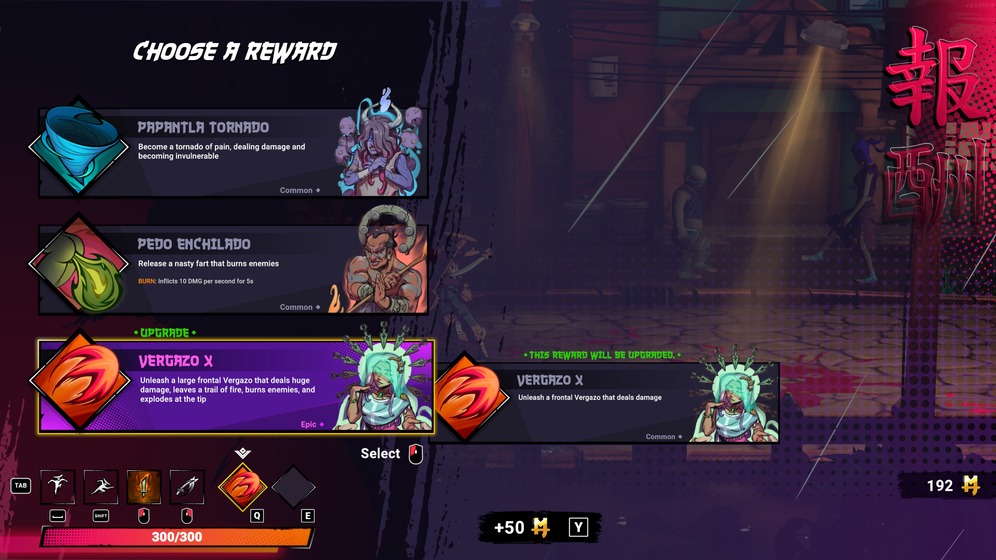
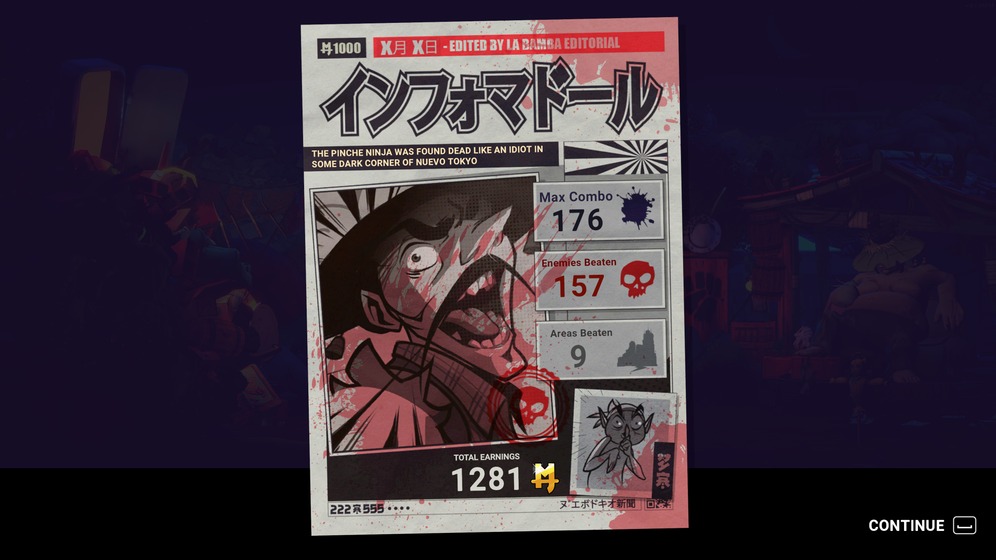
Let's put the story aside for a moment and focus on gameplay, and here, well here we have a classic Roguelike, with everything that entails. The game works in a run-based format where each run has us fighting and clearing different rooms of Narkuza fighters. At the start of each room (or more accurately, during the transition from one room to another) we can choose the upgrade that unlocks along with completing the room we're entering. The upgrades are quite varied and include several different types, ranging from upgrades directly related to your character's passive stats to upgrades directly related to the types of moves we can perform and the different effects they include (in the game's language these abilities are called "Mexican Jutsus"). The variety in the Mexican Jutsus abilities and different upgrades is indeed pretty good, but there were quite a few runs where I felt I'd already encountered a certain upgrade too many times. Continuing with the genre's guiding principle, we naturally arrive at the boss fights that appear every few rooms, and here too I think the game manages to position itself well compared to its competitors thanks to boss battles that are both challenging and fun.

Between the different runs we perform, we can return to a base where we can upgrade our character with permanent upgrades - which are essentially the key that will eventually allow us to complete a full run of the game from start to finish. Here too, the upgrades are pleasant and logical (like an upgrade that improves the base damage level we can deal through the amount of health we'll have and more), and here too the experience of unlocking upgrades and constantly improving our character is good. Overall, a full run of the game (which I managed to complete after close to 10 hours of gameplay) took me about a full hour - a relatively standard length for full runs of games in the genre (in Hades II for example, a full run takes between half an hour to an hour, depending on abilities and progression of course). The game also includes an entire system of side quests that we can receive from various characters we'll meet along the way - in the case of these quests, they're missions whose rewards will mainly be new outfits we can wear, but it's still a great way to deepen the game world and provide us with additional ways to express ourselves in it.
Sharp as a Razor?
The combat experience and completing the various challenges in Mexican Ninja is overall good - the game's combat system includes full combos we can perform with our sword, which we can integrate with the special abilities we unlock throughout the run. The battles in the game are fast, fun, and quite challenging in some cases, but I think the challenge here comes mainly from the camera positioning, so it's not necessarily a point in the game's favor - in my view, it's actually more of a problem that the game's camera isn't balanced enough.
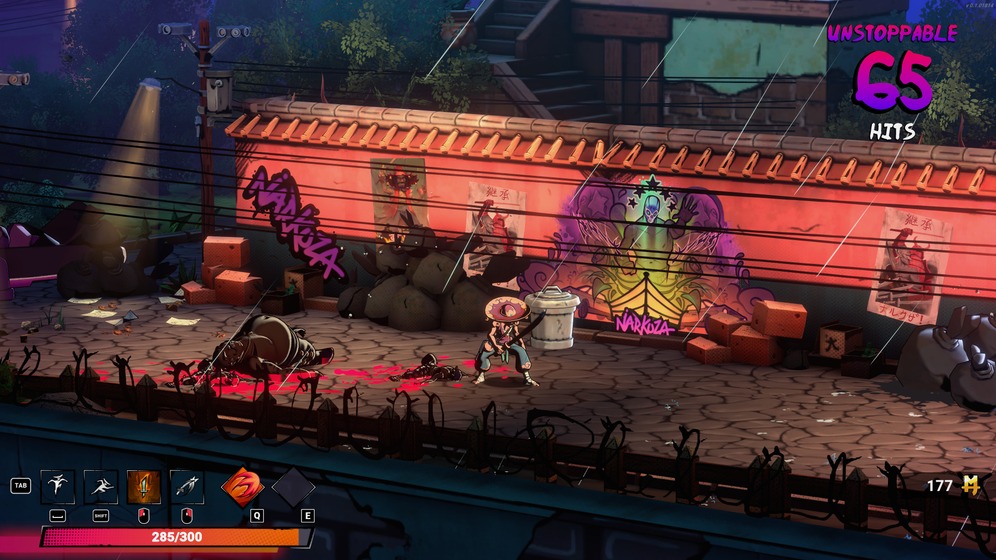
Another interesting element in the game's favor relates to the fact that the combat system draws heavy inspiration from Beat 'em up games, where the combo system I mentioned in the previous paragraph combined with the special abilities the game throws at us will allow us to perform moves that include, among other things, the ability to launch an enemy into the air and keep them there for a few good seconds assuming we managed to execute a combo dedicated to this purpose. The combat abilities resulting from using these mechanics make the game's combat experience much more fun and unique compared to other Roguelike games, mainly because it allows us to utilize the environment better and along the way also provides a quality level of challenge due to our need to rely heavily on combos and quick reactions to what's happening on screen.
My only complaint here would be related to the fact that it happened to me quite a few times that a certain enemy managed to land a precise combo on me that caused me to be unable to dodge any attack for a while, which makes the game feel much less balanced and fair. Additionally, relying on Beat 'em up mechanics usually requires integrating skill-based gameplay into Co-op multiplayer mode (after all, that's the way such games were meant to be played the vast majority of the time) - the fact that Mexican Ninja leans heavily on Beat 'em up but doesn't provide us with the ability to play it together with another friend is disappointing, especially if you're longtime fans of the genre - there's a pretty big sense of missed opportunity here, unfortunately.
Another point I have here is the fact that the game boasts heavily about being a combination of narco fighters and ninjas, but in the same breath the game doesn't allow you to make any use of firearms like pistols and rifles, which reduces the level of variety we could have gotten as a result of this really charming combination - beyond the fact that your character wears a large sombrero and some of the abilities lean on elements that can be connected in one way or another to Mexican culture (and so do some of the dialogues), most of my time with this game I felt much more ninja than Mexican, and in my view there's a bit of a miss in this aspect. That said, regarding the overall look and design direction of the game, Mexican Ninja delivers a good product - the game's environments blend wonderfully between branching Mexican streets and Japanese temple and street areas, alongside instances where we get a fusion of the two.
The Bottom Line
Mexican Ninja is a very charming Roguelike that knows how to stand out in the right places but also maintain the "rulebook" of this crowded genre as it should. Overall, it's a very pleasant experience even if ultimately the combination of Mexicans and ninjas feels less quality and impressive than I would have liked it to be. Worth noting that its price is also great, only 52 shekels through Steam.