Review: Gothic 1 Remake - No Safe Place
Does the 2001 game philosophy still hold up today? After over fifty hours, this old-school RPG surprised with its willingness to punish players and make them feel insignificant in a hostile world.
Does the 2001 game philosophy still hold up today?
Review copy provided by THQ Nordic, thank you very much!
Over a year ago, I played the Gothic 1 Remake demo, and in an unfortunate coincidence, I played it the same day I tried the Crimson Desert demo. While Crimson Desert showcased unbridled action, insane dynamics, and diverse abilities, Gothic felt like another generic RPG built in Unreal Engine 5. The combat system wasn't precise enough, the world felt somewhat artificial, and the entire demo looked like an engine tech demo still waiting for someone to give it character. Accordingly, I approached the full game with fairly low expectations. Nostalgia didn't play a role for me either. I'd heard of Gothic when the original launched in 2001 and knew it held an almost mythological status among RPG fans, but I'd never spent enough time in the Colony to develop a personal connection. The remake would have to convince me on its own merits, without childhood memories doing part of the work.
Diving Into the Past
After more than fifty hours, I'm happy to say my impression has changed significantly. A large portion of that time wasn't even dedicated to story progression. I wandered the map, got lost, arrived at places I hadn't planned to reach, and fled from creatures far stronger than me. The difficulties that plagued the demo are still here, but almost every part of the experience has received serious polish. Combat is faster, the world has gained character, and the Colony manages to create a feeling that has almost vanished from modern RPGs. Gothic 1 Remake is an old-school game in every possible sense. Sometimes this approach gives it a refreshing character, and in other cases it reminds me exactly why some of these ideas disappeared over the years. Its charm lies right in the middle. It's willing to punish the player, leave them confused, and make them feel insignificant. In 2026, the mere willingness to challenge RPG conventions is already points in its favor.
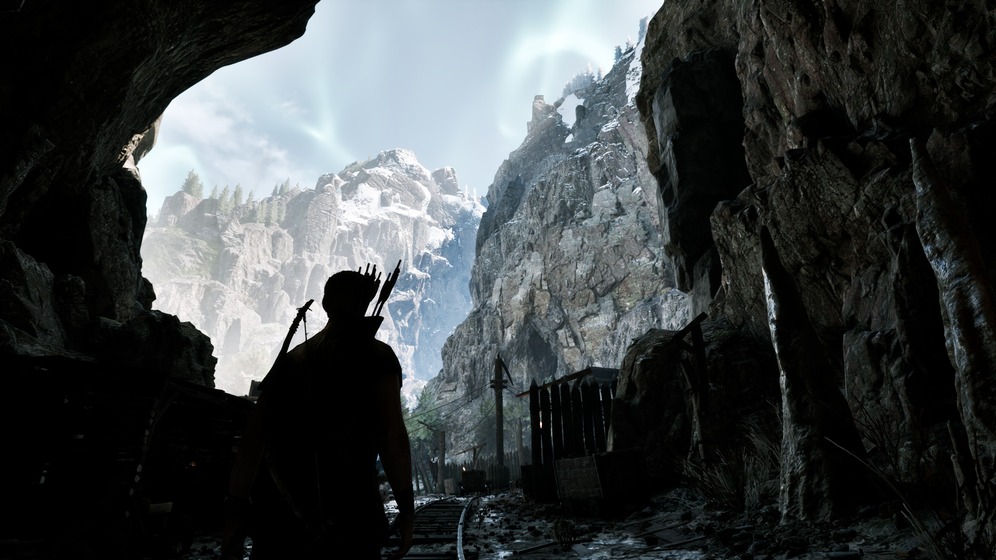
In case you're unfamiliar with Gothic 1, I'll give you a background summary. The kingdom of Myrtana is at war with the orcs. King Rhobar needs massive quantities of Magic Ore, the only material from which powerful weapons can be forged to defeat the orcs. To maximize mine output, the king enacts a law: anyone who commits a crime is sent to hard labor in the mines of The Mining Valley. To prevent prisoners from escaping, the king orders the 12 most powerful mages in the kingdom to create a magical barrier around the entire valley. The barrier was designed to be one-way—living creatures can enter, but anyone trying to exit is immediately destroyed by the magic. Of course, something went wrong and the barrier expanded far beyond what was planned, leaving even the mages themselves trapped inside. In the chaos that ensued, the prisoners seized the moment, killed the guards, and took control of the valley and the mines. The king had no choice but to negotiate with the rebellious prisoners, and thus an arrangement was born—the king sends new prisoners, women, food, and supplies into the valley, and in return the prisoners send him the Ore he needs for the war.
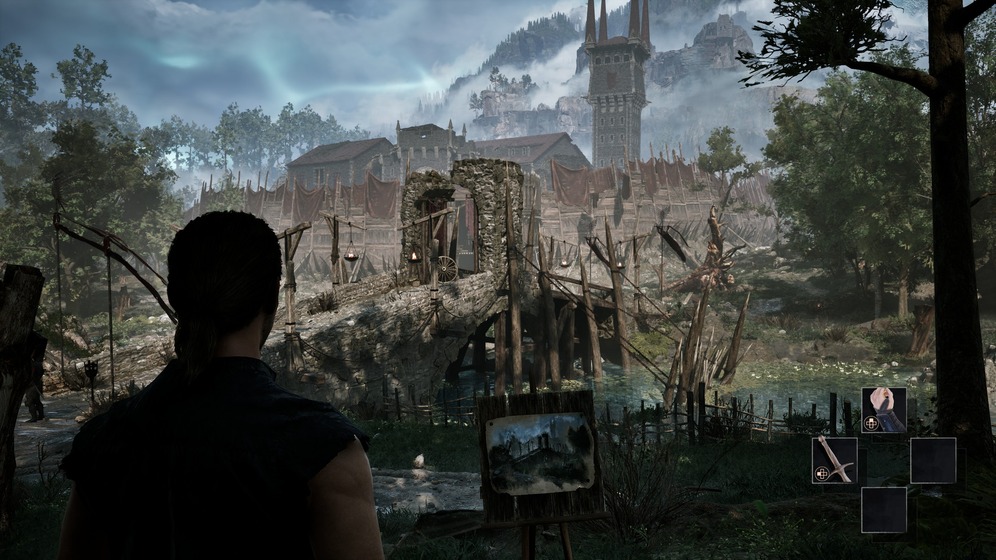
Inside the valley (trapped under the barrier), the prisoners split into three main camps with different ideologies: the Old Camp, the largest and strongest camp, ruled by Gomez. They're the ones managing direct trade with the king and maintaining the status quo. The New Camp, a group of rebels who refuse to cooperate with the king. Their mages are trying to accumulate enough Ore to blow up the barrier from within. And the Swamp Camp, the camp of the Sect that believes in a mysterious entity and that enlightenment can be achieved by smoking herbs. You play as the nameless hero, and the game begins the moment he's thrown into the barrier as a new prisoner, carrying a secret letter he's supposed to deliver to the head of the Fire Mages.
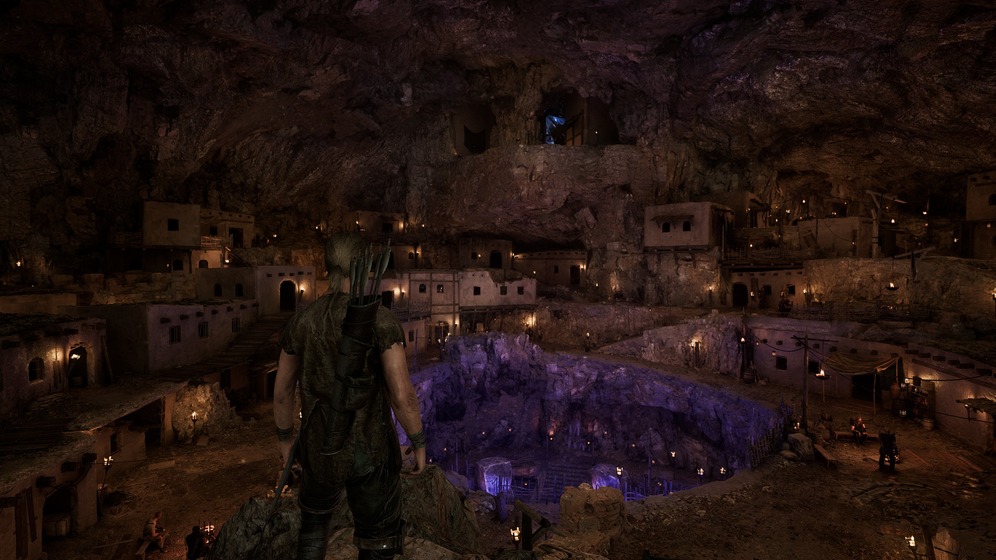
From the very first moments, it's clear the hero's role will be larger than it initially appears. The path there starts from the bottom. No one in the Colony is impressed by your arrival, no one has reason to trust you, and almost everyone you meet will want something from you. The only way forward is to get to know the different camps, complete tasks for the people living in them, and gradually build your standing. The story foundation feels like a very familiar fantasy world. There are mages, orcs, goblins, swords, and plenty of creatures most genre fans will recognize immediately. Occasionally the game pulls out a slightly less predictable monster, but most of the time it works with familiar and beloved genre staples. This genericness doesn't necessarily work against it. There's a reason we keep returning to worlds with magic, swords, and monsters, and the Colony has enough character to turn familiar materials into a place you want to explore.
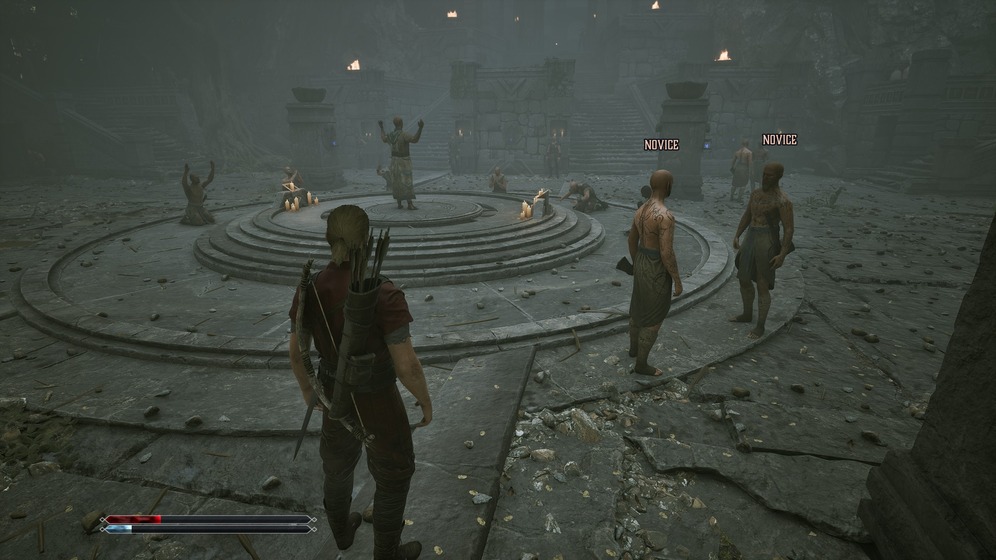
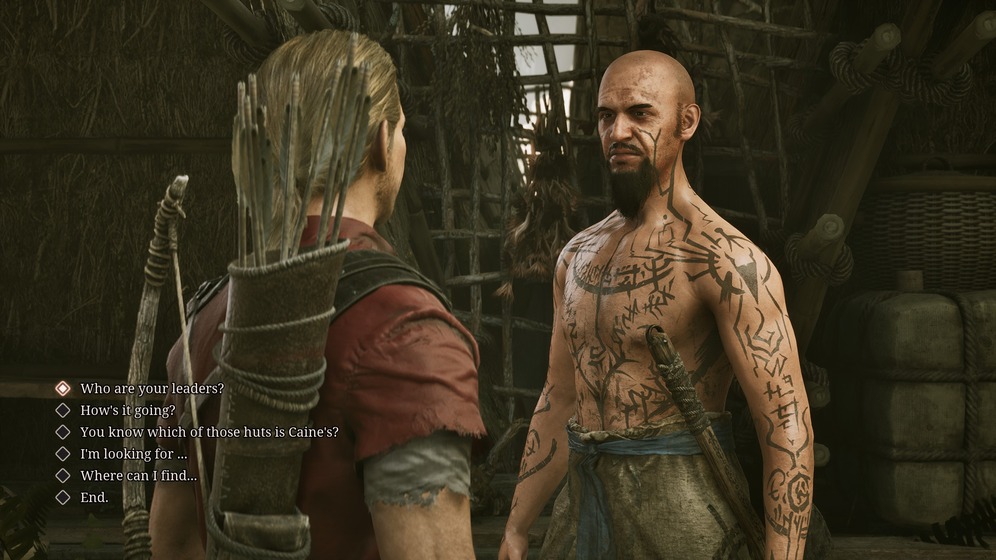
I chose to join the Old Camp, mainly because I always prefer playing as a mage and that's where the path to becoming a Fire Mage opens up. The camp is built around a very rigid hierarchy, and every character knows their place. The strong run things, the weak work for them, and anyone who wants to advance must learn the rules quickly. This structure gives even simple quests additional depth, since almost every request is an opportunity to improve your standing with someone influential. One of the most interesting stories I've encountered so far is Syra's story. She's a woman who recognizes that she's exploited and enslaved within the camp because she's a woman, but also understands she needs the help of a man who harms her in order to survive. She's trapped inside a system built against her and tries to operate using the few tools available to her. In my view, this is particularly strong material, especially in an era when many games prefer to avoid complicated and uncomfortable situations like this.
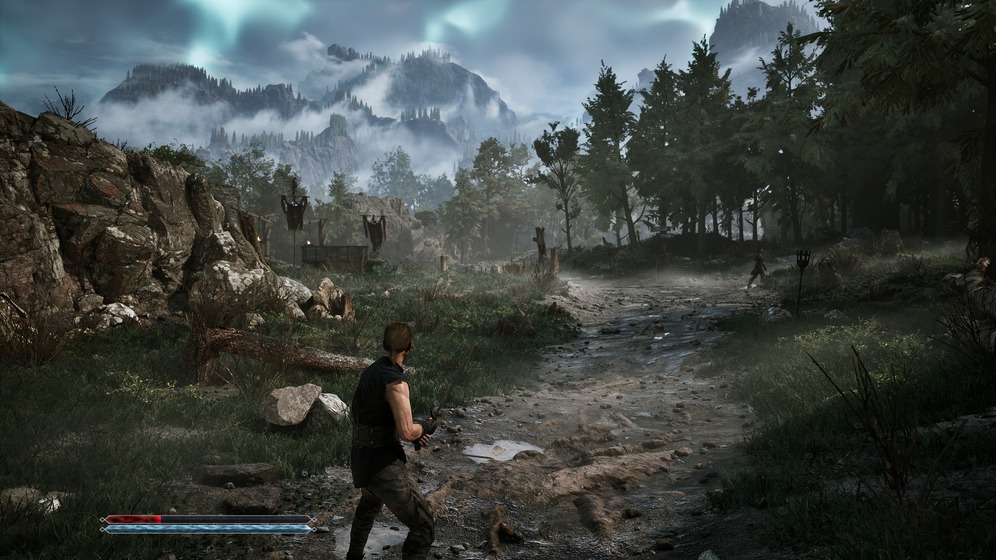
The dialogues themselves aren't particularly complex. Many sentences repeat themselves, some characters sound similar to each other, and conversations usually get to the point quickly. As someone who doesn't love long dialogues, I found this approach refreshing. Gothic doesn't stop the adventure every few minutes to present a lengthy conversation or cutscene. Characters deliver the necessary information, the quest is added to the journal, and you can get back on track. The story pacing is also good thanks to this approach. There are many quests, few dialogues between them, and lots of running from place to place. This isn't a hundred-hour journey trying to fill every corner with more content. It tells a relatively focused story and leaves enough room for wandering, exploration, and random encounters.
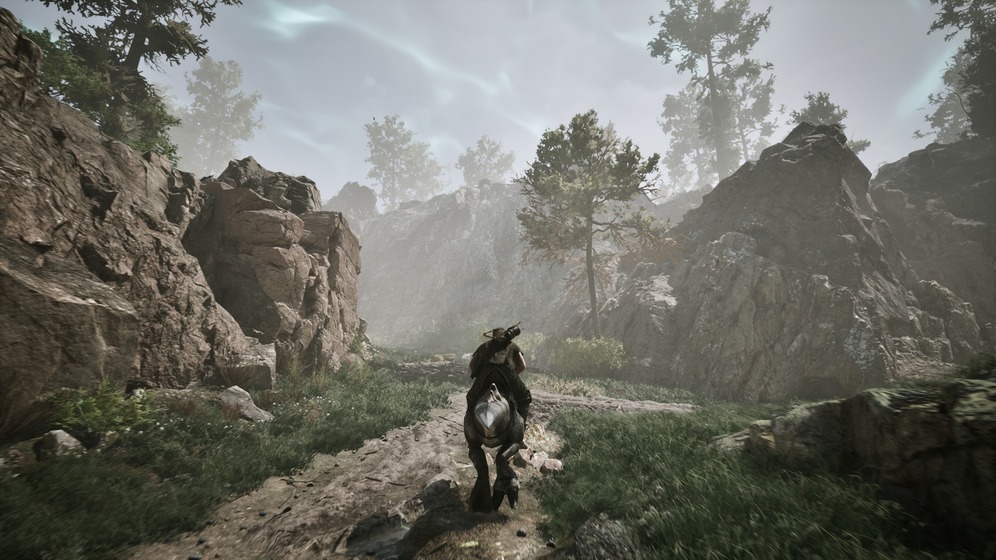
Learning While Moving
After more than fifty hours, I can confidently say that Unreal Engine 5 is looking at me from almost every direction. The generic feeling that bothered me in the demo is still present, but the full game shows much more polish and character. The New Camp is the best example of this. It's a colorful and impressive area that manages to stand out against the grayness, mud, and dirt characterizing large parts of the Colony. Visually, Gothic 1 Remake doesn't stand in the front row of 2026 games, but it looks good enough that this gap doesn't hurt the experience. The lighting does its job, the environments are detailed, and the world manages to be beautiful without completely losing its hostile feel. It's easy to see the game was rebuilt in Unreal Engine 5, but it's undergone much more work than the demo I played over a year ago. The user interface is confusing compared to what I'm used to, but after Crimson Desert, I suppose you can get used to anything.
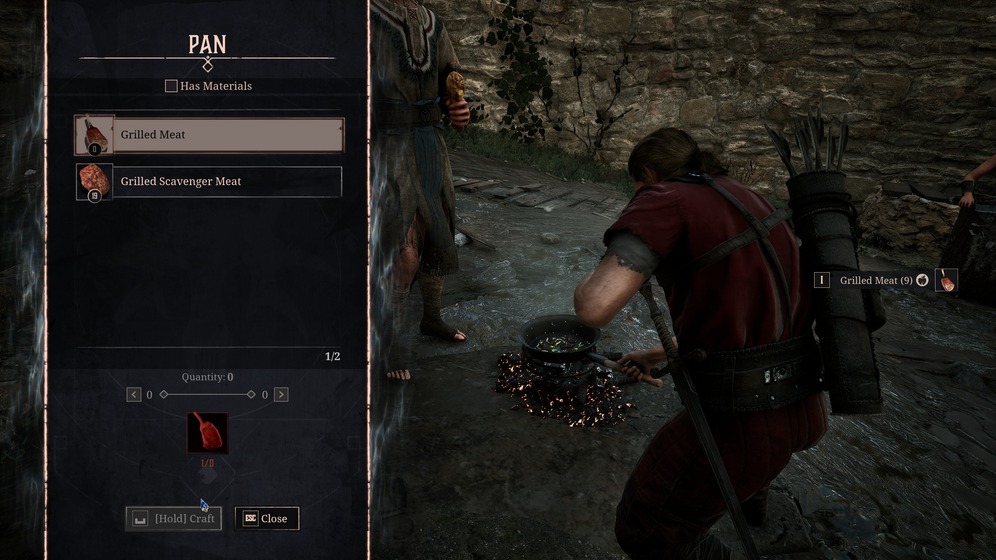
On PC, the game ran well without significant performance issues affecting the experience. I did encounter graphical glitches, mainly characters disappearing and leaving behind a floating head, a phenomenon particularly fond of appearing in cutscenes. Monsters and creatures also sometimes get stuck inside the ground, and in one case I managed to fall beneath the world. But these days, in what big RPG haven't we found ourselves staring at the map from below? The music does an excellent job creating atmosphere, but after about ten hours I decided to turn it off. It plays almost non-stop, including while paused in menus, and doesn't allow you to stop for a moment and switch windows in peace. Surprisingly, the decision to forgo it revealed one of the game's most impressive aspects. The Colony sounds amazing. Forest rustles, animal sounds, conversations around the campfire, and sounds coming from inside the mines create a rich world that the music hides much of the time. The melodies themselves are good and atmospheric, but I strongly recommend lowering them at least occasionally and letting the world speak. There's a lot to hear in it.
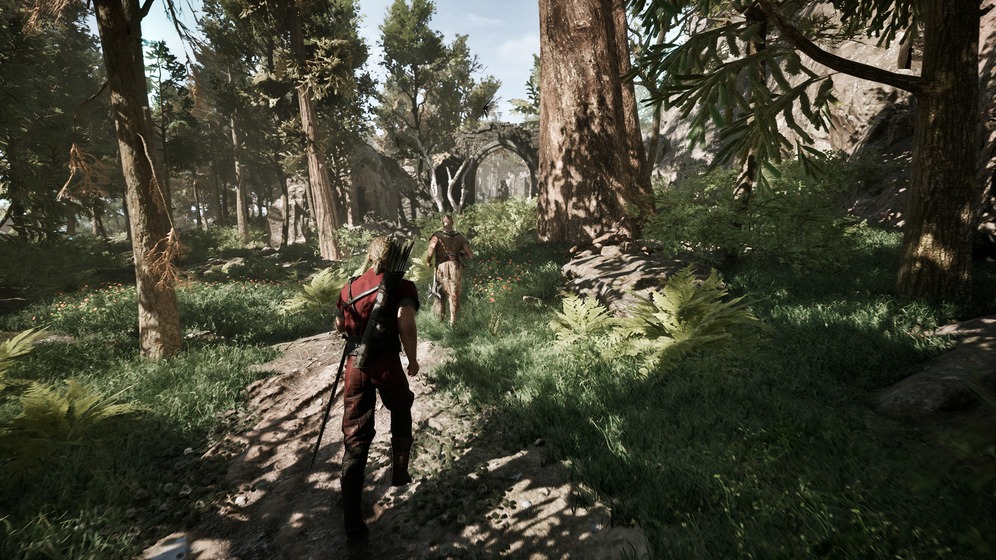
The Cherry on Top
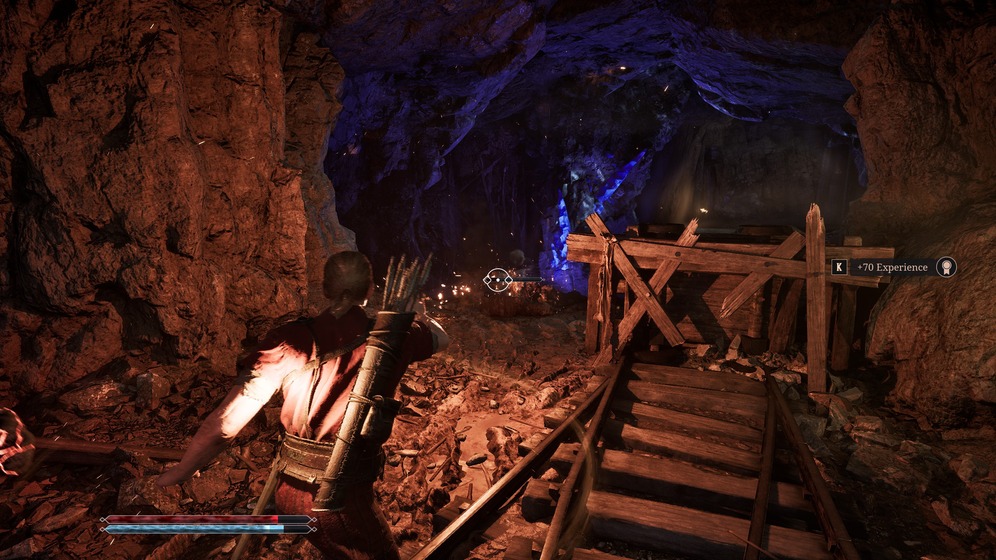
What I love most about Gothic 1 Remake is that the game almost never tells me what to do. Even the journal keeps partial information, and you can get lost even on main story quests. The map doesn't magically appear from the first moment. You need to find someone who sells it, obtain the required amount, and only then get the map. And not only that, there are also sub-maps for each camp you need to buy separately from the right people. This combination turns every departure from camp into a real risk. Getting lost doesn't end in a few wasted minutes of running. It can lead to an encounter with creatures that will quickly eliminate you, especially at night. On one occasion I left for the New Camp to complete some quests, then decided to return to the Old Camp. At some point night fell and I realized I had no idea where I was. I had no map, no marker showing the way, and wolves and monsters started coming at me from the darkness. I tried climbing to high places to see the Old Camp from afar, but it's very difficult to search for a vantage point when half the forest is trying to eat you. I ran without knowing where, until I noticed a wooden structure that looked human-made. I decided to run toward it while the creatures behind me continued closing the distance. Luckily, I reached the Old Mine. The torchlight calmed my heartbeat, and the miners sitting around the campfire felt at that moment like the best friends I'd ever had. All I wanted was to sit down next to them and tell them how good it was to see them.
Moments like these explain why Gothic's dated approach still works. The game allows you to get lost, fail, and arrive at places by chance. It doesn't rush to save you from a bad decision or mark the safest route on screen. As a result, a simple event like returning from one camp to another can become a personal story I'll remember long after I forget a large part of the quests.
The combat system has also undergone significant improvement since the demo. It's faster, more responsive, and contains more action than the initial experience led me to think. I also discovered systems and options I didn't know about in the demo, which gave combat more depth and a better feel. Still, Gothic leans heavily on character stats. Equipment, level, and abilities you've developed sometimes matter more than your timing and skill. Even a technically successful fight can end in failure when the opponent is simply too strong for the numbers behind your character. In some ways this resembles the tab-targeting of the early 2000s but somewhat upgraded. Something like Guild Wars 2.
The target lock mechanic is a bit confusing, and this is especially noticeable when several creatures attack you simultaneously. In such fights it's easy to lose control, turn to the wrong enemy, and discover the opponent you wanted to block has already reached your back. Early on I planned to play as a mage, which was also one of the reasons I chose the Old Camp. The option to become a Fire Mage sounded exactly like the path I wanted. In practice, a pure mage feels too limited due to the difficulty replenishing mana, significantly lower damage for spells, and general lack of balance. The game favors swords over magic and also over bows. That's fine sometimes, but I would have liked to choose a role in a role-playing game. After several attempts I realized I was falling behind in progression, so I gradually switched to a Spellsword style combining weapons with magic. This combination works better, but there's still work to be done on the game's balance.
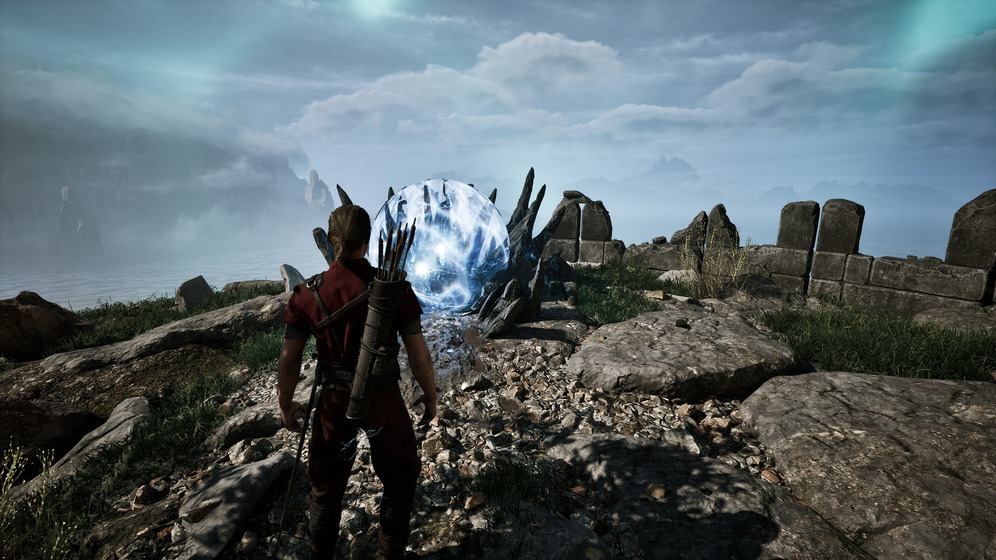
Leveling up gives points you can spend on abilities, but you can't unlock them just because some number went up. You need to find someone who knows the field, convince them to teach you, and sometimes pay for the knowledge. This way character progression feels connected to the world and not like a separate menu. The quests themselves are very classic. Quite a few ask you to go to a certain place, bring back an item, and return to the character who sent you. The foundation comes from a game over twenty years old, so it's easier to forgive the dated structure. Still, I would have liked to see the remake take more opportunities to expand quests and give them more interesting solutions.
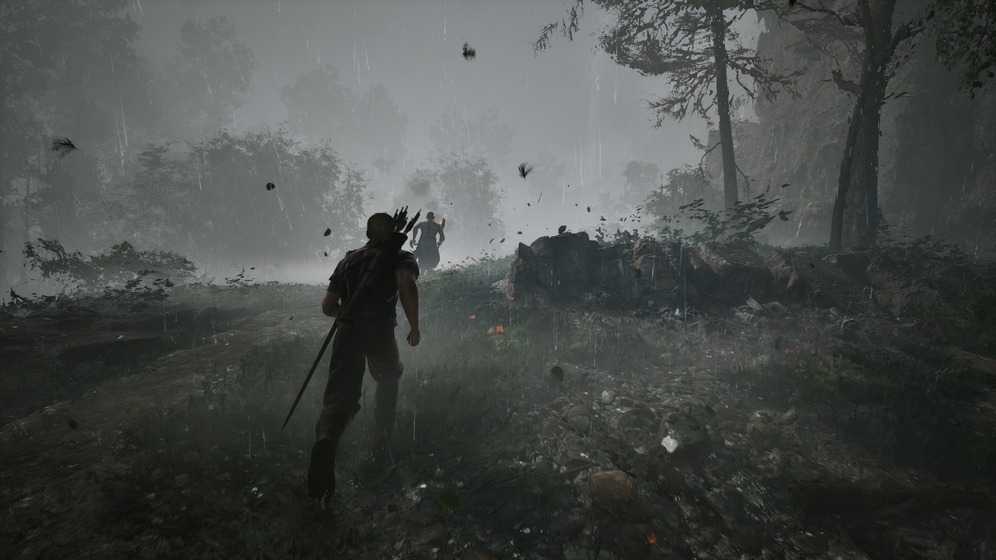
Enemy variety isn't particularly large, but the difficulty level completely changes how you approach them. At some point I found myself running from rats, and a wolf's howl became a sound sufficient to make me immediately check which direction it was coming from. Most RPGs place the main character at the center of the world and gradually teach the player they're the most dangerous thing wandering around. Here the main character is the prey. The idea that almost every opponent is more dangerous than you makes exploration more meaningful. Every new path is a gamble, every cave could be a mistake, and every piece of equipment that manages to improve your survival chances feels precious. The fact that it's hard to extract value from corpses also reinforces this feeling. The Colony is stuck in the middle of nowhere with very few resources, and its economy reflects this reality. Where that economy becomes a burden is in trading. Merchants almost never have enough money to buy the expensive equipment you've accumulated. Selling items becomes a journey of its own, including running between camps, buying goods through barter, and trying to transfer value from one merchant to another. During the process you lose some value with each exchange, and the whole business feels like a series of somersaults just to get rid of a sword. There's charm in a game unafraid to challenge the player, but trading doesn't create an interesting survival story like getting lost at night. It mainly wastes time.
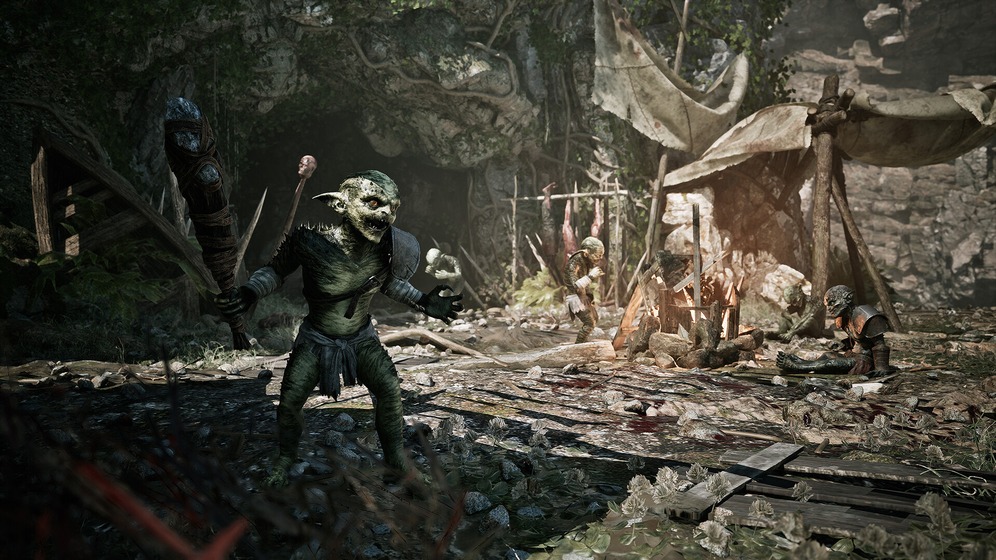
The sense of danger doesn't disappear even inside the camps. Someone can beat you up, take your money, and continue their daily routine. There's no place that feels completely safe and no reason to assume every person you meet wants what's best for you. This lack of security gives the Colony a rare character. In 2026, a world willing to remind the player they're an insignificant person feels more refreshing than another story where everyone awaits the arrival of the chosen hero.
The Bottom Line
Even after all the work invested in the remake, it's hard to say the foundation has aged gracefully in every area. Combat still leans more on stats than precise action, quests feel pulled from another era, and some mechanics require patience that's no longer taken for granted. I enjoyed it, but it didn't pull me in for days like the biggest RPGs. Still, Gothic 1 Remake brings back to the genre a spirit that disappeared from it many years ago. It's willing to be difficult, threatening, and unforgiving. It's willing to let the player make mistakes, die, get lost, and even rage quit. For me, a game that manages to draw such emotion from me is already doing something right. Surprisingly, I would also recommend it to those who haven't played many RPGs before. For veteran players, some of the ideas here will feel familiar, but a younger player might discover an approach that has nearly vanished from the genre. A world that doesn't hold your hand, themes unafraid to be uncomfortable, enemies that don't wait until you're ready, and an economy that feels like it truly belongs to an isolated place. Gothic 1 Remake surprised me for the better. It's not the most polished game I've played this year, but it reminded me how exciting it is to feel small inside a dangerous world. The moment I emerged from the darkness, saw the torchlight of the Old Mine and just wanted to sit with the miners around the campfire, the Colony had already done its work.