Impressions from the DLSS 5 Presentation at Gamescom 2026!
Nvidia showcased an improved version of DLSS 5 at Gamescom after facing backlash from its initial reveal, emphasizing developer control and demonstrating the technology with NBA 2K27 as its first supported game.
Control Remains with the Developers
An invitation to the presentation was provided to us by Nvidia, thank you very much!
Several months ago, Nvidia unveiled DLSS 5, the new generation and next major leap forward for its beloved technology. But to Nvidia's disappointment, the DLSS 5 reveal wasn't the big celebration it had hoped for—quite the opposite, with many very negative reactions to the graphical quality and the character design that had changed. While Nvidia did unveil the technology alongside the GDC conference and presented it there to developers, there's been a growing trend in recent months of players opposing the use of artificial intelligence to create games, especially one that generates graphical elements. Since then, Nvidia has been working on and improving DLSS 5, and as part of the Gamescom expo a few days ago, I got the opportunity to see the technology in action.
The goal of DLSS 5 is to bring us one step closer to the gaming industry's dream of creating photorealistic graphics. DLSS 5 will accomplish this by using a much more advanced AI model than previous generations, based on a frame rendered traditionally by the graphics card that's broken down by the model into the various elements that compose it (lighting, character, environment, composition, and more). With all this information, the model gets to work improving image quality and adding details. In most of the demos Nvidia showed, the improvement was mainly expressed through much more accurate lighting and the addition of small details that together significantly enhance image quality. You can see a demonstration of this in the attached slider.


Perhaps as a kind of response to player reactions, Nvidia says that DLSS 5 doesn't take away human creative freedom and vision, but rather is an additional tool developers can choose whether to use to bridge the gap between pure design vision and technical limitations. As a result, the model will work in a way where developers create different groups of elements in the scene, with each element receiving the DLSS treatment the developers want—they can even choose to have the model not work on certain elements at all. In the image below, you can see that in this frame there are 3 different groups: jug, grapes, and bottles. On the left side of the image, you can see the treatment intensity for each group as well as the global intensity that will apply to the scene. All these settings are designed to leave control with the developers rather than having the AI do whatever it wants—instead, it performs what it's directed to do. In response to my question, I was told there's no limit on the number of groups that can be created, so theoretically every smallest element could receive individual treatment if developers choose.

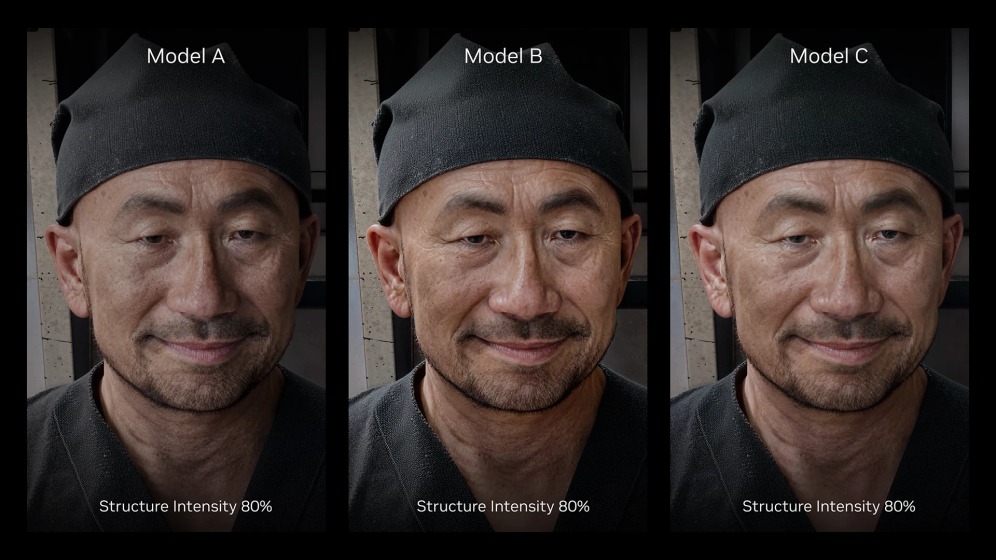
At the bottom of the menu, you can see that developers will be able to choose between three different models, each trained on different materials and each producing a slightly different graphical result. This is another tool Nvidia is providing with DLSS 5 to still leave control with developers over the outputs they receive. Here too, it will be possible to choose that different elements will be based on model A while other elements look better with model C and will be based on it. One more important thing to add is that the better the input, the better the result will be. This means that the same scene rendered at high graphics settings will yield better results with DLSS 5 compared to the same one at low settings, simply because the model has more information to work with and refine the frame. This is also true for enabling Ray Tracing, which will improve the output even further.
The first game to support DLSS 5 will be NBA 2K27, which is also where it leaked when modders started applying it to all sorts of other games. The demo I saw for 2K27 showed significant improvements in some scenes, mainly to players' facial features and improvements to small shadows like fingers on the ball or players' ear canals gaining depth. When you see these improvements, they're definitely noticeable and enhance the image, but having said that, I must admit the choice of game to launch DLSS 5 on is somewhat odd. 2K games are played from a distant perspective—when was the last time you saw players' faces up close? Improvements to how players grip the ball are minor, and who even looks at their ear canals?


I think one of the main things I took away from Nvidia's demos is the company's tone, which feels much more defensive and bordering on apologetic after the DLSS 5 reveal. But having said that, I do think the technology has relevant uses that can yield good results for players, and the concerns that were raised are not as serious as they were made out to be.