Review: Esoteric Ebb - The Heir Disco Elysium Deserved
A dialogue-drunk CRPG with genuine wit and a political heart — Esoteric Ebb earns its comparisons to Disco Elysium not by copying it, but by understanding what made it matter.
Esoteric Ebb does not want to be mistaken for anything safe. It is strange, talky, and politically committed in ways most games are terrified to be — and it is one of the best RPGs in years.
The game launched on PC in early March 2026 at $24.99 from a small independent team working in a homebrew tabletop setting they built themselves. It arrived with almost no marketing and left a huge impression on me. Esoteric Ebb is doing its own thing, and the game is better for it, even if it takes a few hours to become clear exactly what that thing is.
Norvik Is Burning, and Someone Blew Up a Tea Shop
You are The Cleric — a government investigator, an expert in esoteric events, and by your own description a glorified goon for the state. The city of Norvik is holding its first democratic election in its history. The streets are simmering. And someone has reduced a tea shop to splinters in the middle of it all. Your job, alongside your goblin companion Snell, is to find out who, why, and what it has to do with the political upheaval cooking around you.
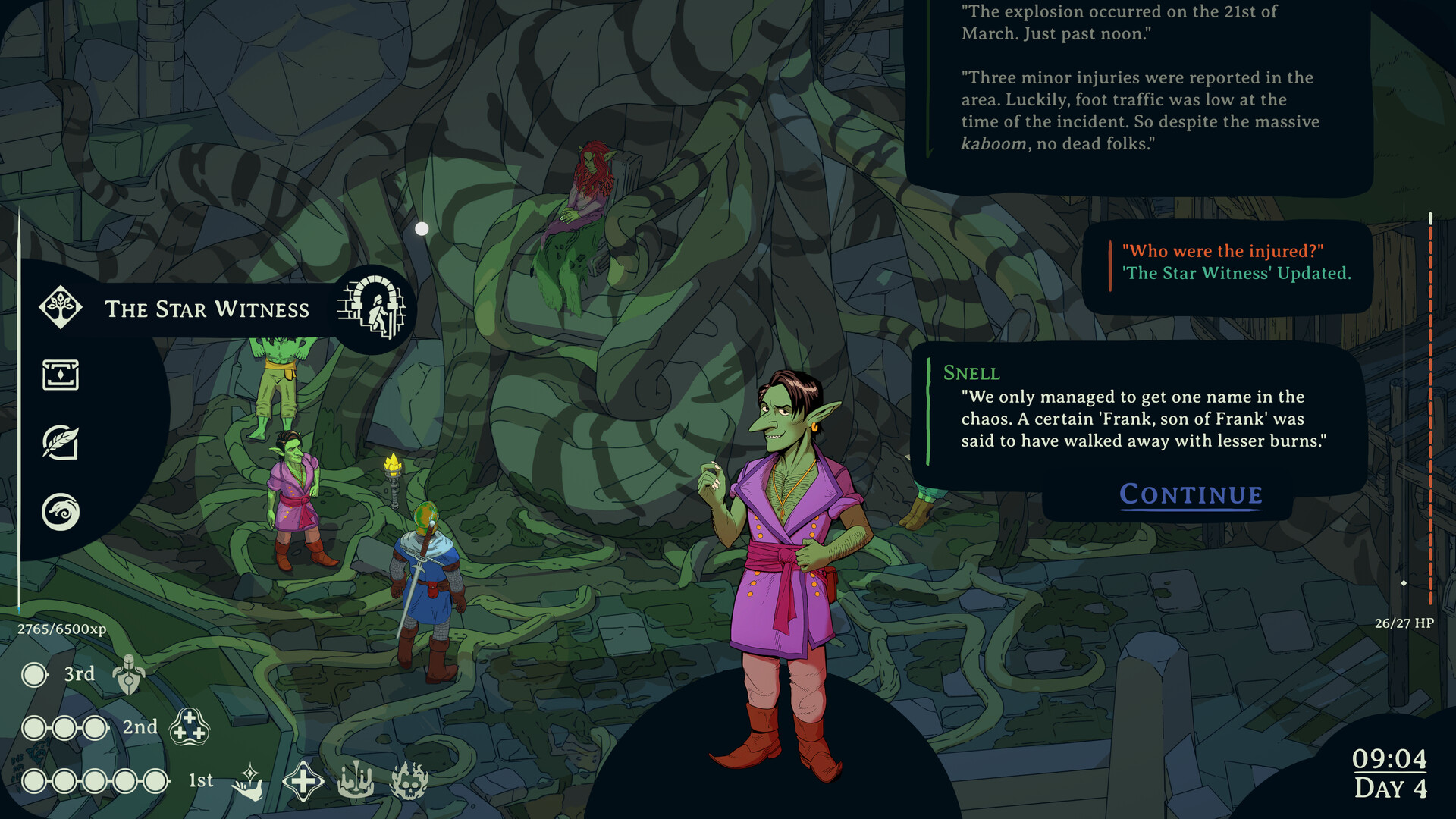
The setting is post-Arcanepunk fantasy — a world where the gods died in a great magical war, mythological creatures sell newspapers on street corners, and the ideological vacuum they left behind is being filled by every faction imaginable. Norvik is a city in the process of becoming something, and the election is the pressure point. Every conversation you have is shaped by that context. Nobody in this world is neutral about anything, and neither are you by the time the credits roll.
The Questing Tree and the Copotype System
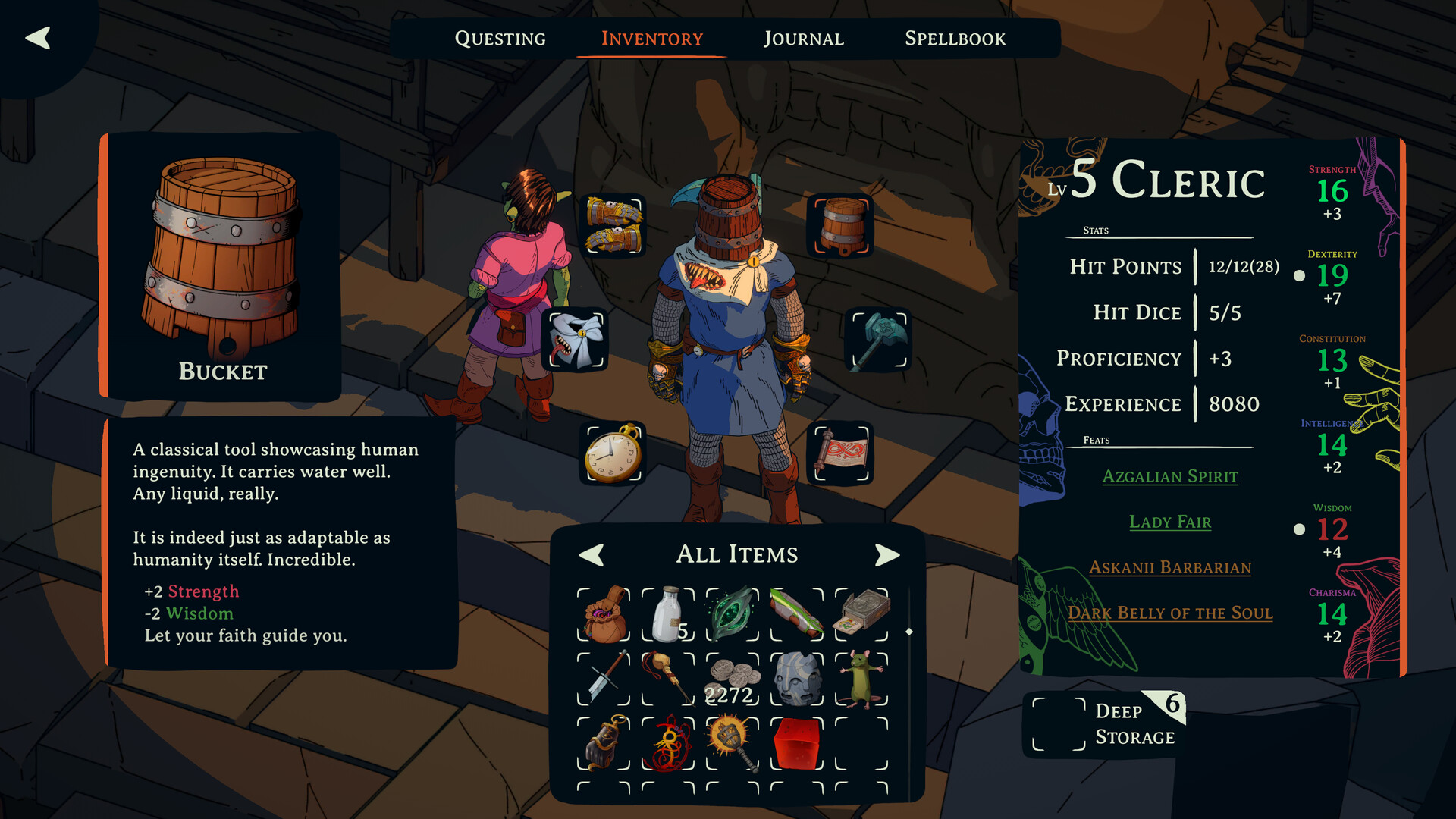
Esoteric Ebb runs on a modified D&D 5e ruleset — six attributes (Strength, Dexterity, Intelligence, Wisdom, Constitution, Charisma), a 27-point stat budget at character creation, and a d20 ability check system where every contested dialogue choice has a visible Difficulty Class you need to meet or beat. Anyone with tabletop experience will be comfortable inside ten minutes. Anyone without it will pick it up within twenty.
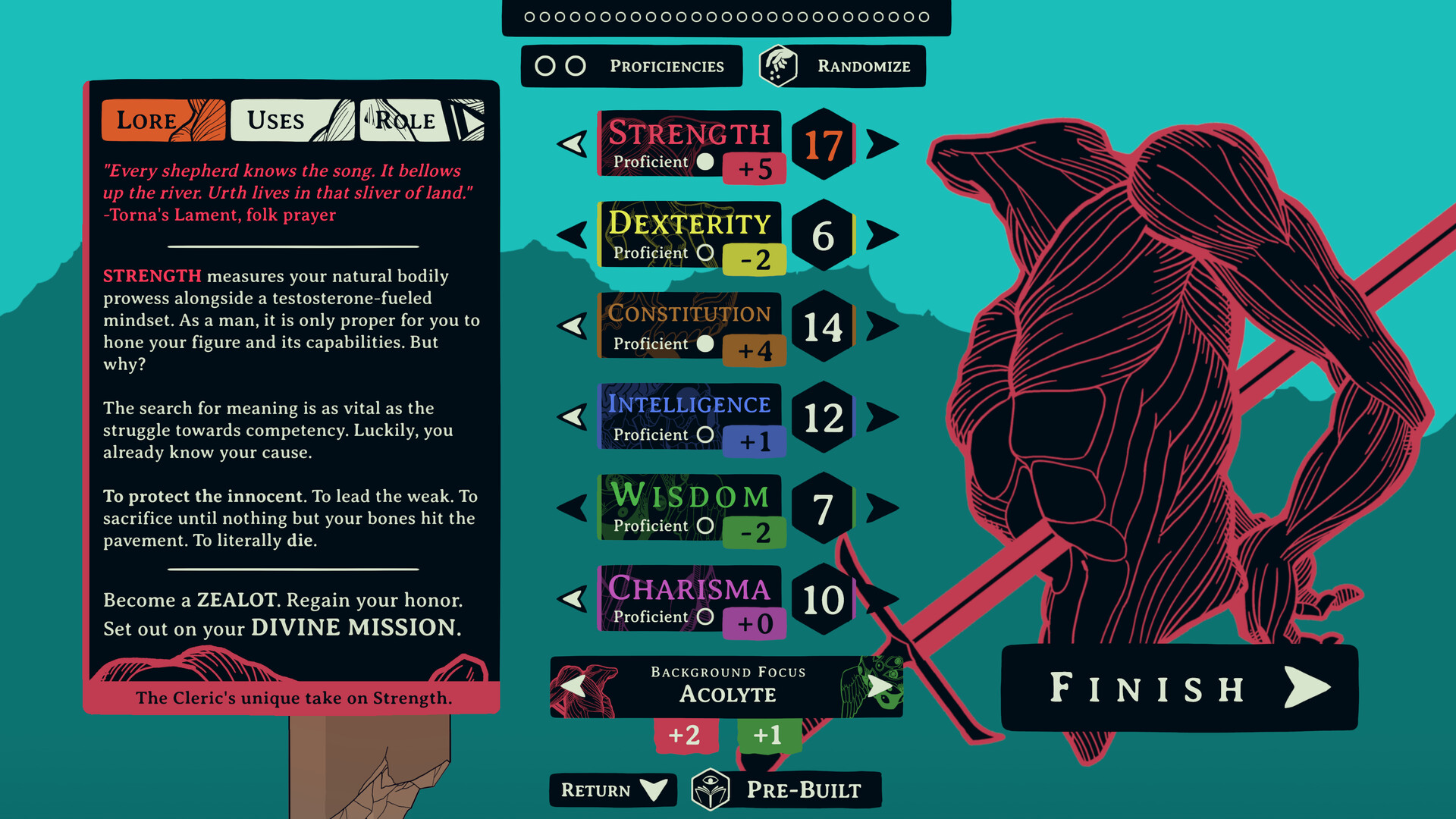
Where the game departs from that skeleton is where it gets interesting. The standard quest log is replaced by the Questing Tree — a branching visual map of every thread you are pulling, spreading outward from the center of the screen like something growing. It is beautiful and occasionally bewildering, but it communicates priority and consequence in a way that a numbered list never could. You see how the threads connect. You see which branches are thickening.
The Copotype system is the other structural invention worth understanding early. Every time you take a political position in dialogue — and you will, constantly, because the game never stops asking — you are accumulating ideological weight. When a major story arc concludes, that weight crystallizes into a Feat, awarded through a reflective dialogue sequence with your own attributes. Your mechanical growth does not come from grinding. It comes from how you played. What you believed. Whether you acted on it. It is one of the most elegant expressions of the RPG form in recent memory.
Your Stats Talk Back
The inner-monologue system is the closest Esoteric Ebb gets to Disco Elysium's signature trick, and it is genuinely its own thing. Your six attributes are not passive numbers on a sheet — they are voices, each with a distinct personality, interrupting conversations to offer analysis, doubt, impulse, and occasionally terrible advice. Intelligence will break down the arcane mechanics of a political argument mid-speech. Charisma will notice someone is lying to you and want to use it. Wisdom will feel the weight of a room before you consciously understand what is wrong with it.
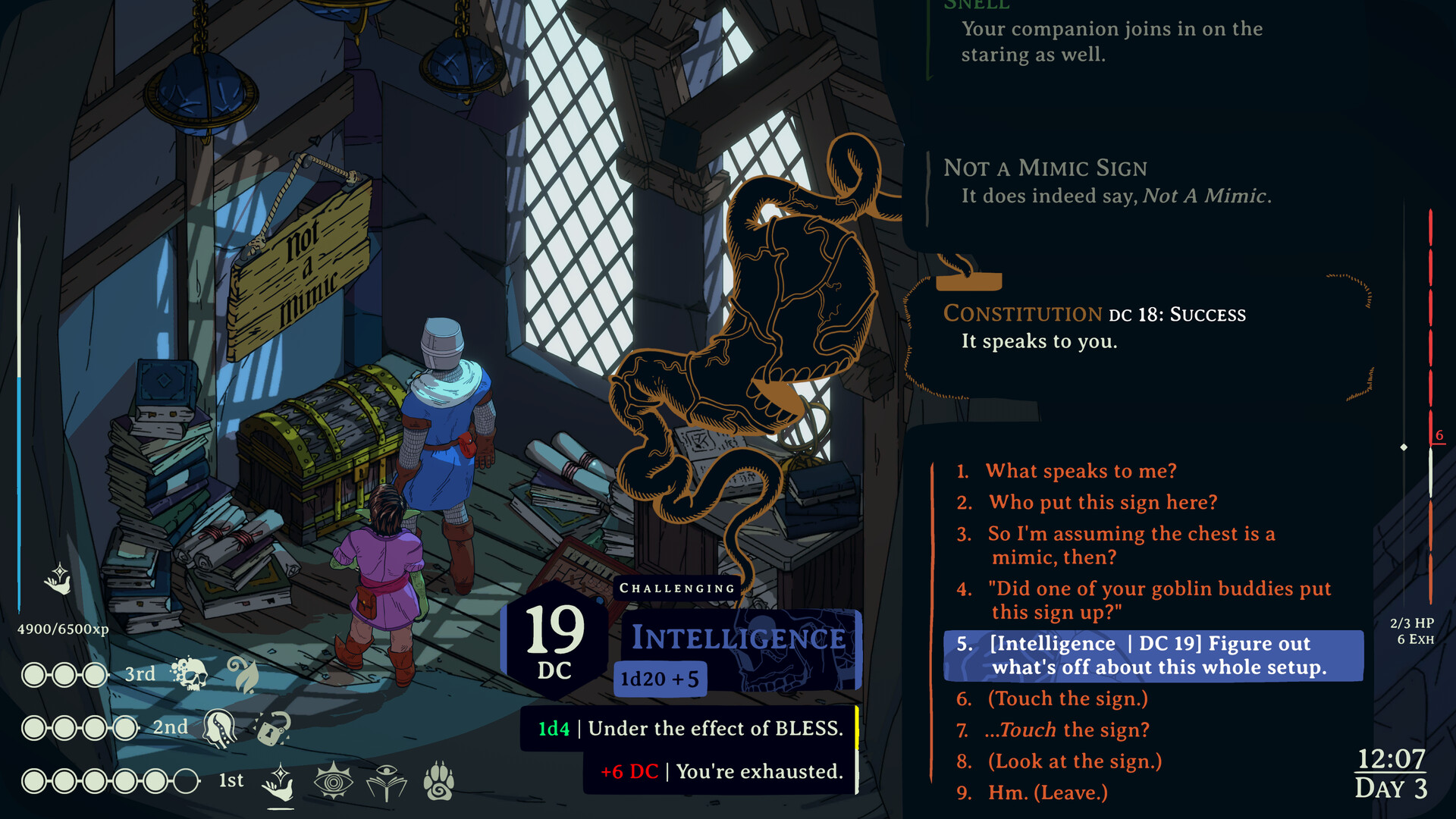
The writing across all six voices is sharp and consistent. Learning to read them — which ones to trust in which situations, which ones are leading you wrong — becomes its own game within the game. High-Strength builds will find doors open through blunt force of will that a high-Intelligence character could never access. A Charisma-heavy Cleric navigates the political webs differently than a Wisdom-focused one. The builds are meaningfully distinct in ways that make a second playthrough genuinely tempting rather than obligatory.
A World Built to Be Looked At
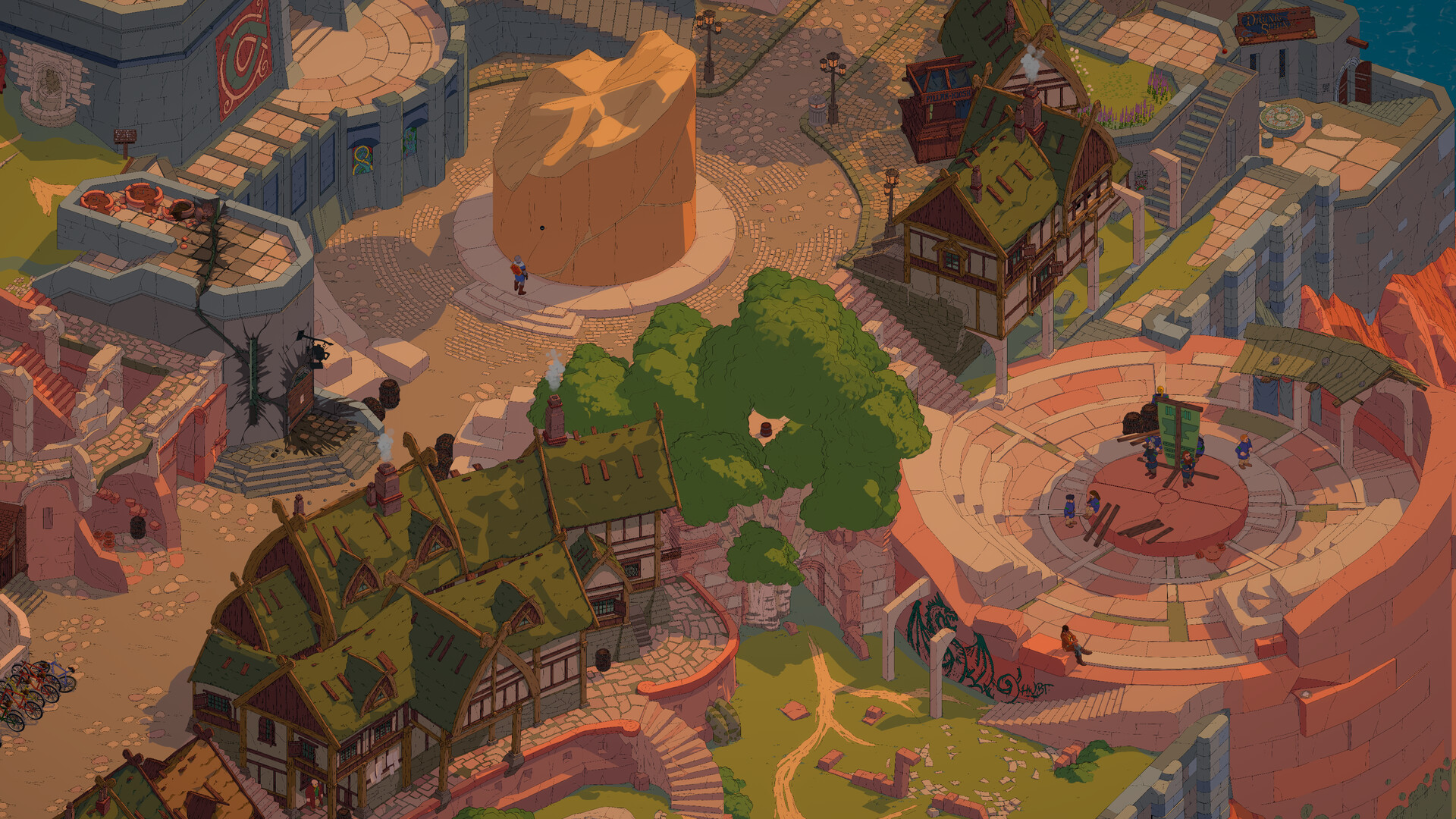
The art direction is immediately striking and holds up through the entire runtime. Esoteric Ebb is illustrated rather than rendered — a hand-crafted isometric world with a palette that mixes muted urban grime with vivid supernatural intrusion. Norvik feels like a city someone designed, not generated. The architecture has history behind it. The election posters plastered on every wall are individually written. The character portraits during dialogue are expressive in ways that carry emotional information the text is only half-saying.
The soundtrack works the same way — present but not overbearing, rising when the game needs it to, content to sit underneath the prose the rest of the time. This is a game that trusts its writing more than its score, and that trust is mostly earned.
Where It Struggles
Esoteric Ebb is shorter than its genre peers — a complete first run lands somewhere around ten to fourteen hours depending on how thoroughly you engage with the world. That is not a fatal flaw, but it is a real one. Several side threads feel like they are building toward something that the runtime cannot quite deliver. The game ends having said what it wanted to say, but you occasionally feel the edges of what a longer development window might have done with the space.
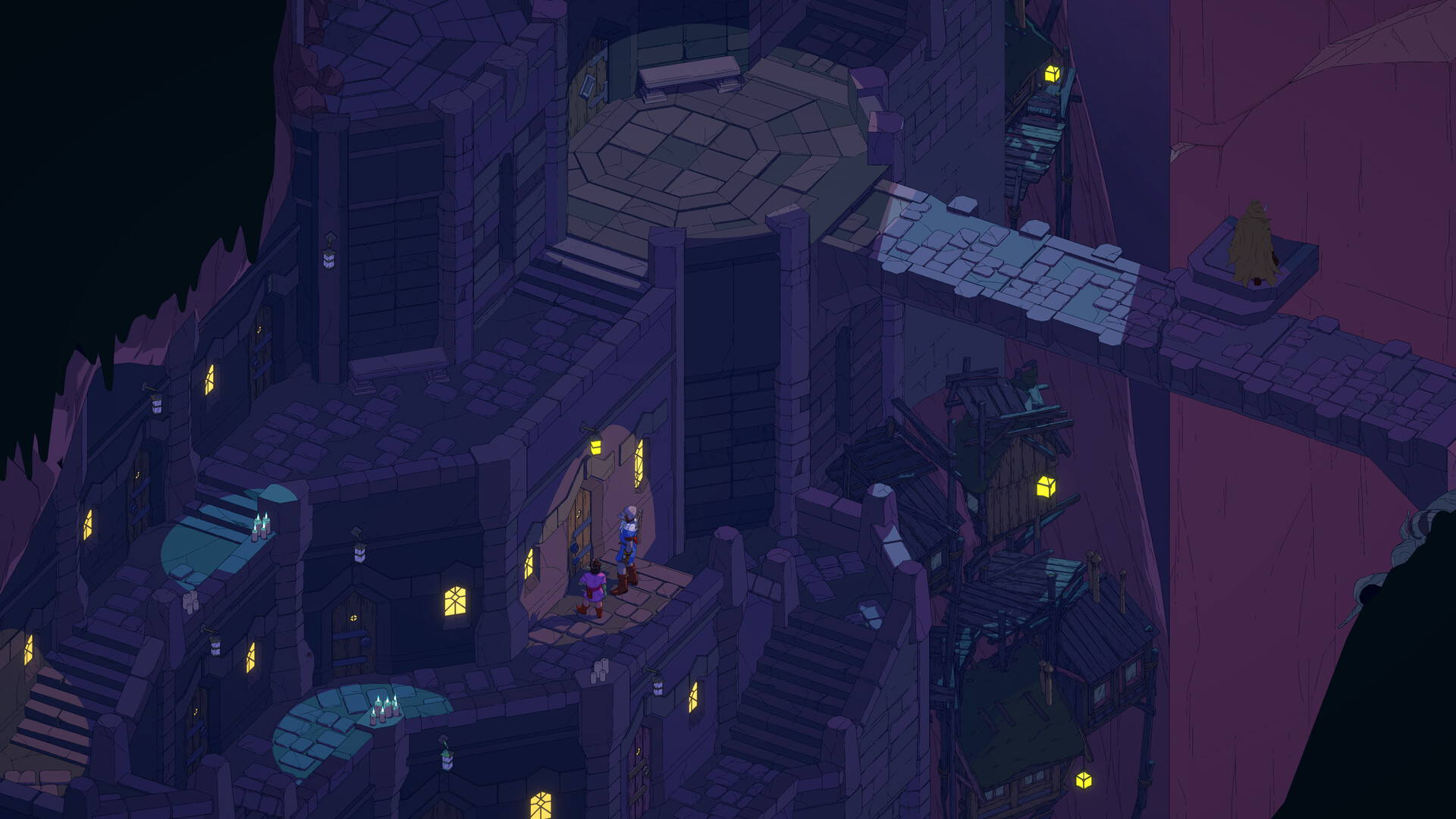 Navigation is a consistent irritant. The Questing Tree is conceptually elegant and functionally confusing for longer than it should be. Spatial orientation within Norvik's districts takes real time to develop, and the game provides less hand-holding than it probably should for players who are not already comfortable with isometric RPG conventions. Some conversations run longer than they need to — a few late-game dialogue chains feel like they are padding rather than building, and the game does not always know when it has made its point.
The Disco Elysium comparisons, while deserved in spirit, occasionally reveal where Esoteric Ebb is still finding its confidence. Some of the inner-monologue interjections feel like they are imitating a mode rather than inhabiting one. The moments where the game is fully itself — the Copotype sequences, the best political arguments, the scenes where Snell earns the player's trust — are noticeably stronger than the moments where it is still operating in someone else's shadow.
Verdict
Esoteric Ebb is a remarkable debut from a team that clearly understood what they wanted to make and built exactly that. The Copotype and Questing Tree systems are genuine mechanical innovations. The writing is literate, politically serious, and often funny in the way that only comes from actual craft. Norvik is a place worth spending time in, and The Cleric's investigation earns its ending.
It is not a perfect game. The navigation is rough, the runtime leaves some threads hanging, and a handful of sequences are leaning on Disco Elysium's furniture rather than their own. But the bones are extraordinary, and the best parts of Esoteric Ebb — the sequences where the Copotype crystallizes, where your stats argue with each other about what you actually believe, where the political conspiracy snaps into focus — are among the most interesting things an RPG has done in years.
If you have any tolerance for dialogue-heavy, politically engaged RPGs, this is the clearest recommendation of 2026 so far. At $24.99, it is also one of the easiest asks.